SEO Content Tools for Lean Teams
TLDR; Choose by bottleneck: drafting, optimization, or full workflow automation.
Surfer SEO and Clearscope lead for on-page optimization and content scoring. Frase is the budget pick for briefs, research, and fast drafting. SEOZilla comes out on top for lean teams that need end-to-end seo automation software: brand-aligned writing, internal linking, multi-site CMS publishing, and fewer manual handoffs.
Lean teams usually do not need more tabs, extra handoffs, or a bigger pile of half-finished drafts. They need SEO content tools that help them move faster without quality slipping. If you’re comparing the best SEO content tools or trying to find practical seo automation software, the main question is still pretty simple: which platform actually helps the team research and write, optimize, publish, and keep the workflow from turning into a mess?
The leading options were reviewed with one thing in mind: what tends to work in real life for digital marketers, SEO specialists, content managers, and growth teams with limited time and big traffic goals. That includes AI writing, internal linking, optimization depth, publishing support, and how well each tool fits into a real content operation instead of just looking good in a polished demo. In short, the focus is on real work.
This comparison probably matters even more now because lean teams are being pushed to publish more across blogs, landing pages, and other channels while still protecting brand voice, technical SEO quality, and editorial standards. The tools below can help, but they are not built the same way. Some tend to be better for optimization, while others are stronger for briefs. A few also do a much better job with full workflow automation, which often becomes more important as deadlines start piling up.
What we’ll cover
- Seozilla
- Surfer SEO
- Clearscope
- Frase
SEO content tools you’ll probably want to check out
1. Seozilla SEO content tools platform
At a glance
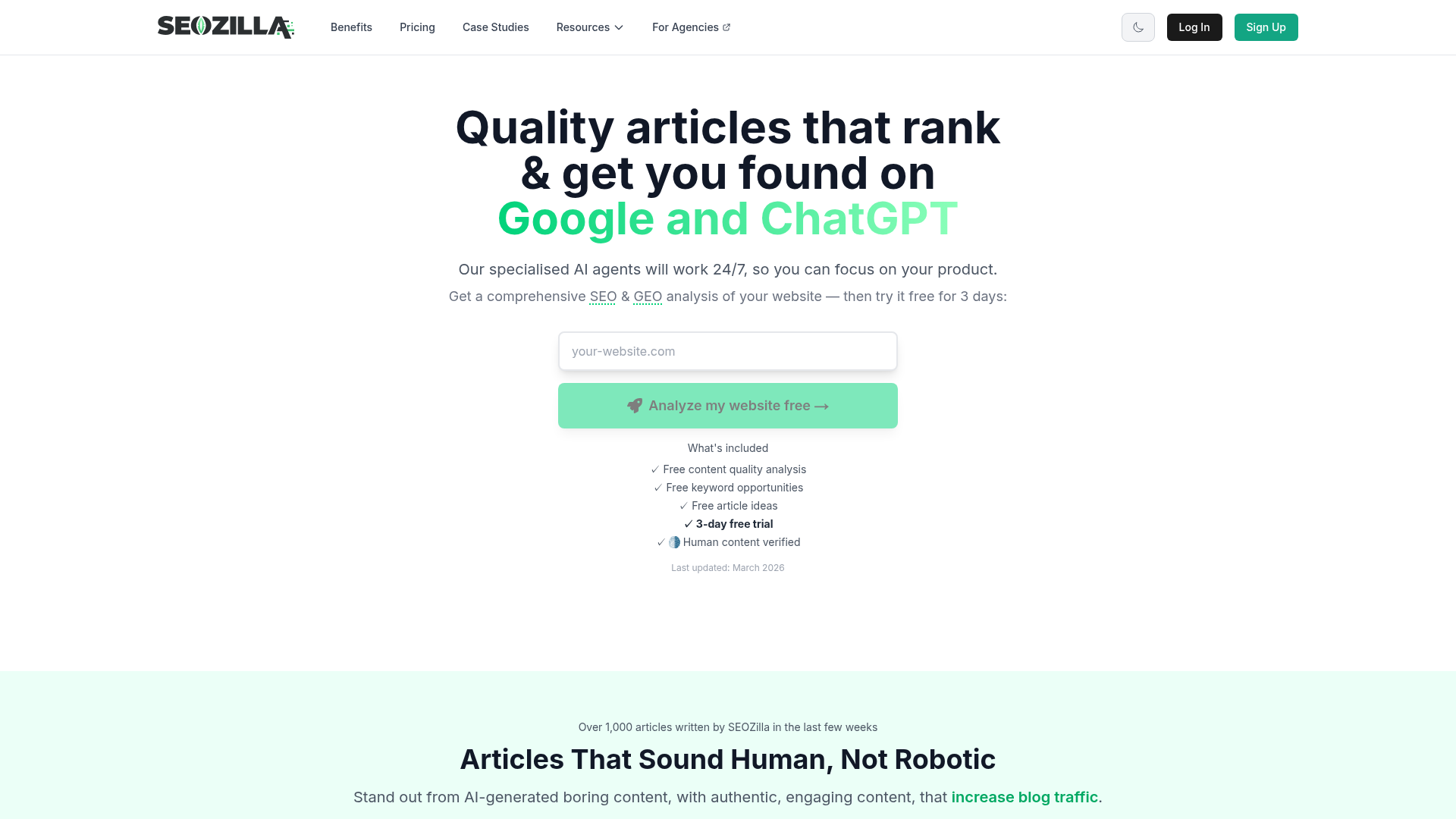
SEOZilla.ai is an AI-powered SEO content automation platform made for teams that need to create and publish content at scale without as much hands-on work. It does more than produce drafts. The platform is designed to support the full production process, from brand-aligned writing and SEO structuring to automated internal linking and publishing across popular CMS platforms. For lean SaaS, e-commerce, and growth teams, that can be a big advantage, because the bottleneck is often not just the writing. A lot of delays usually happen when content has to move from an initial idea to a live page in WordPress, Ghost, Webflow, Shopify, HubSpot, or Wix quickly, cleanly, and without extra friction.
Core features
- AI-powered SEO content creation for search-driven workflows
- Brand-aligned writing that helps keep tone more consistent across pages
- Automated internal linking to support site structure
- Direct publishing and multi-site support across CMS platforms
- Integrations for WordPress, Ghost, Webflow, Shopify, HubSpot, Wix, and REST API workflows
- Content export plus publishing support for existing marketing stacks
- Human review support for teams that want quality control before anything goes live
Pros
- Built for end-to-end workflow: It helps with drafting, but it also helps teams move from content creation to publishing with fewer manual steps, which is often where time gets lost.
- Strong CMS flexibility: Support for WordPress, Ghost, Webflow, Shopify, and other systems makes it easier for teams with a mixed stack to stay in one workflow.
- Better fit for lean operations: Automated publishing and internal linking cut down the repetitive work that often slows smaller marketing teams down.
- Brand-aware content output: The platform focuses on writing that stays closer to company voice instead of sounding generic.
- Helpful for scale: For teams managing multiple sites or publishing often, the automation layer will often give a real advantage.
Who it’s for
SEOZilla.ai is a strong match for lean marketing teams, SaaS companies, e-commerce brands, and mid-sized online businesses that need to publish SEO content on a regular schedule without building a large editorial team. It is especially useful for teams that care about brand voice and want content to move into their CMS without a lot of extra handling or constant copy-pasting. For small teams trying to keep output steady and consistent, it often fits naturally.
Unique value proposition
What makes SEOZilla.ai stand out is that it treats SEO content more like an operating system than a simple writing prompt box. In practice, that means writing, optimization, internal linking, and publishing are connected in one workflow instead of being patched together manually by the team. Plenty of tools help with research, scoring, or first drafts, but fewer bring those production steps together in one place. That difference is usually most useful for teams trying to grow organic traffic without adding headcount. The platform’s Human + AI approach also adds something important: teams get automation while still keeping room for review, judgment, and editorial control before anything goes live.
Real world use case
Imagine a SaaS marketing team with one SEO lead and one content manager looking after two product sites and a blog. It is a small setup, and that is often exactly where workflow friction shows up first. Instead of bouncing between separate tools for drafting, optimization, linking, and uploading, they use SEOZilla.ai to create search-focused articles, connect related pages, and get content live faster, which is honestly usually the harder part. The result is a steadier publishing rhythm and fewer workflow bottlenecks. In many cases, that means less time spent moving between tools and more time focused on managing content strategy.
Teams comparing broader SaaS SEO tools will usually notice that workflow automation becomes more valuable as publishing volume grows.
Website: https://www.seozilla.ai
2. Surfer SEO content tools
At a glance
Surfer SEO is one of the better-known SEO content tools for on-page optimization. Founded in 2017, it’s especially known for its Content Editor, scoring system, topical mapping features, AI writing support, workflow tools built around ranking content, and keyword-focused recommendations. For lean teams, Surfer is appealing because it gives clear optimization guidance in a format writers and SEO managers can use quickly, which usually matters a lot when time is tight. It’s easy to use. It often works best when a team already has a content process and wants more structure, stronger term coverage, and practical page-level improvements.
Core features
- Content Editor with optimization scoring
- AI writing support
- Topical Maps for content planning
- Keyword research features
- SEO audit tools
- Content optimization workflows
- SERP-driven recommendations
Pros
- Strong optimization guidance: Surfer does a very good job helping teams improve on-page content with clear SEO direction.
- Useful for scaling writers: The editor gives writers a framework, and that can help cut editing time.
- Good planning support: Topical mapping helps teams build stronger content clusters.
- Widely known in SEO circles: It has a large user base, along with a lot of educational content built around it.
- Pairs SEO and drafting well: Teams that want optimization plus AI assistance may find that mix helpful.
Cons
- Less focused on publishing automation: It helps teams create and optimize content, but in most cases they still need extra tools to publish at scale.
- Not a full SEO stack: Backlink analysis and broader SEO operations may still require other platforms.
- Can feel prescriptive: Some writers feel score-based optimization can make content feel too similar when it’s used too rigidly, and that concern is real.
Who it’s for
Surfer SEO is a strong fit for content teams that already have editorial processes in place and want better control over on-page SEO. It works well for agencies, in-house SEO teams, and marketers focused on improving rankings through structured optimization rather than full workflow automation. When a team already knows how it plans, writes, and edits content, Surfer will probably fit more naturally into that setup.
Unique value proposition
Surfer’s main strength is that it turns SEO recommendations into something teams can actually use day to day. Rather than leaving people with broad advice, it gives writers a working environment where they can optimize while drafting. For lean teams that need clearer guardrails, that can be really helpful, even if they still rely on other tools for publishing and broader SEO work, which they often do. That balance is a big reason Surfer is still popular.
Teams comparing platforms may also want to review this detailed breakdown of Surfer SEO vs Ahrefs to better understand where optimization-focused tools fit in a larger SEO stack.
Pricing: Starts around $89/month.
Website: https://surferseo.com/
A quick look at public starting prices and company founding years helps show how these tools position themselves across different budgets and different stages of company maturity.
| Tool | Founded | Public Starting Price | Primary Workflow Strength |
|---|---|---|---|
| Seozilla | , | , | Content automation + publishing |
| Surfer SEO | 2017 | $89/month | On-page optimization |
| Clearscope | 2016 | $129/month | Content scoring + editorial guidance |
| Frase | 2016 | $49/month | Briefs + drafting + optimization |
These numbers do not tell the full story, but they still show an important pattern. Frase is the easiest to try if budget is the main concern. Clearscope starts at a higher price point. Surfer lands somewhere in the middle. SEOZilla.ai stands out less for public list pricing and more for workflow depth for teams that care about automation, multi-site publishing, and reducing manual SEO tasks.
3. Clearscope
At a glance
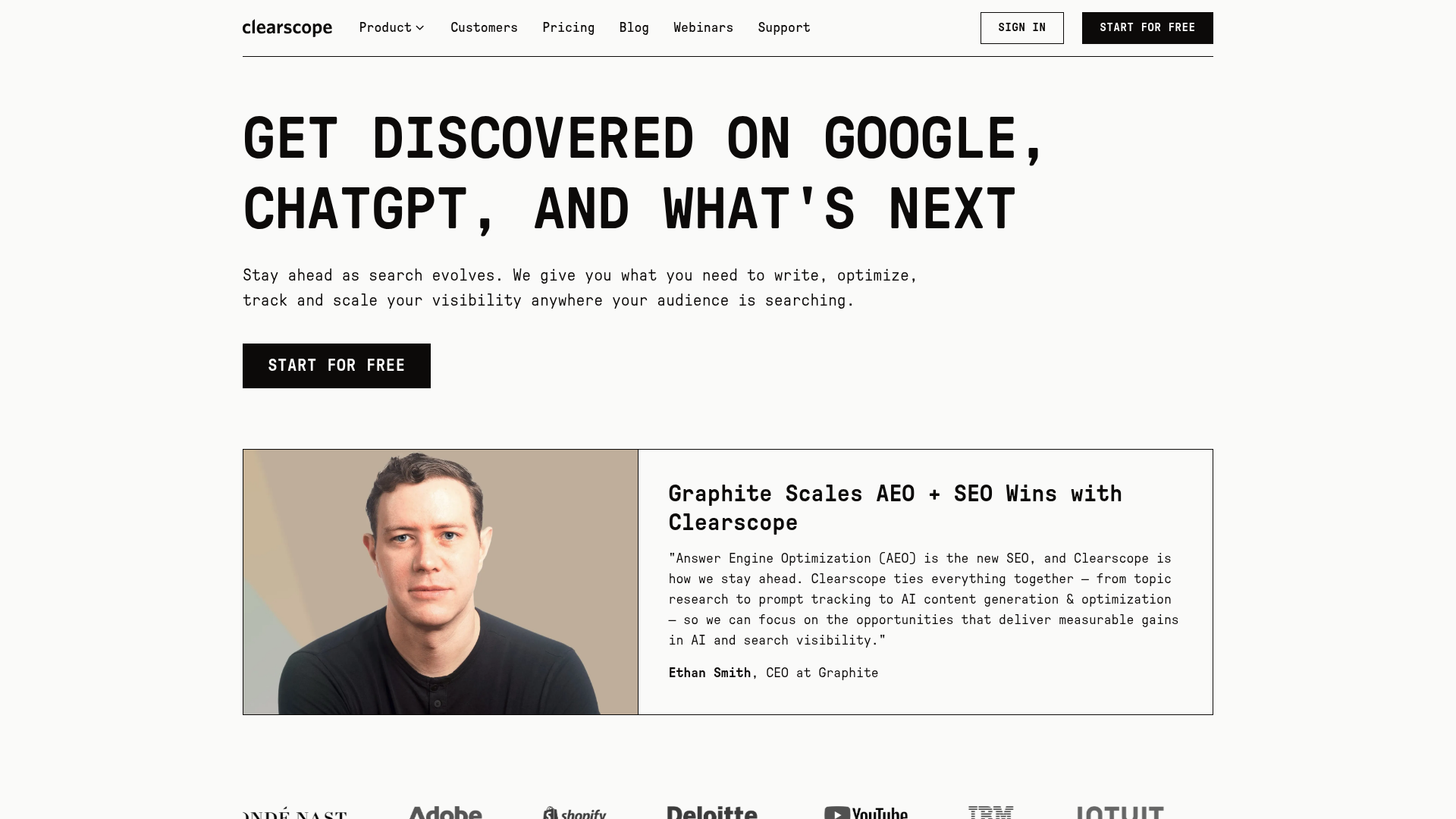
Clearscope has built a strong reputation as a premium content optimization tool. Founded in 2016, it’s often chosen by teams that want a very clean writing interface, dependable content grading, simple keyword recommendations, and useful topic guidance. Its biggest draw is usually how simple it feels. The platform is plain, clear, and easy to move around in. Writers and editors can often start using it quickly without much of a learning curve, and that tends to matter a lot for lean teams. When several people are part of the same content workflow, that ease becomes even more helpful. In my view, that’s one of the main reasons it often remains popular with editorial teams.
Core features
- Content grading and optimization reports
- Keyword recommendations, topic suggestions, and guidance for updates
- Clean editor experience for writers
- Content monitoring features
- Editorial workflow support
- Optimization insights for refreshes and new content
- Team-friendly content review environment
Pros
- Excellent editor experience: The interface is clean and easy to use, so teams can usually get started faster without much setup stress.
- Strong content scoring: It gives writers and editors a clear sense of how optimization is going and where a draft will likely need more work.
- Easy for non-technical users: Content managers can use it without deep SEO training, which makes it easier to adopt.
- Good fit for editorial teams: It supports review and optimization workflows well, especially when writers and editors are working closely together.
- Reliable for content refreshes: It can help improve older pages, and it’s also useful when creating new ones.
Cons
- Higher entry price: It can be expensive for smaller teams compared with lower-cost alternatives, so budget is often a real consideration.
- Narrower feature set: It stays focused on optimization and editorial quality, and that focus is often useful. But it doesn’t try to handle full automation or broader SEO work like publishing or technical management.
- May require companion tools: Teams will often still need separate systems for publishing, technical SEO, and larger-scale content production, so it probably won’t replace a full stack.
Who it’s for
Clearscope is best for content-led teams that want a polished optimization tool and are willing to pay more for a simple, writer-friendly experience. It’s a strong fit for companies with active editorial review processes and a clear need for content scoring. It makes less sense, though, for teams that want one platform to automate more of the pipeline, including production and publishing. I think it works best when a team already has a process in place and mainly wants a better way to improve drafts before they go live.
Unique value proposition
Clearscope stands out mostly because it’s easy to use. It makes SEO optimization feel less intimidating for writers, editors, and content leads, and that is usually its biggest advantage. The experience is simple and straightforward. So if the main challenge is improving content before it goes live, rather than automating production and publishing, Clearscope is still a strong option and probably an easier one for writers to adopt.
Pricing: Starts around $129/month.
Website: https://www.clearscope.io/
4. Frase
At a glance
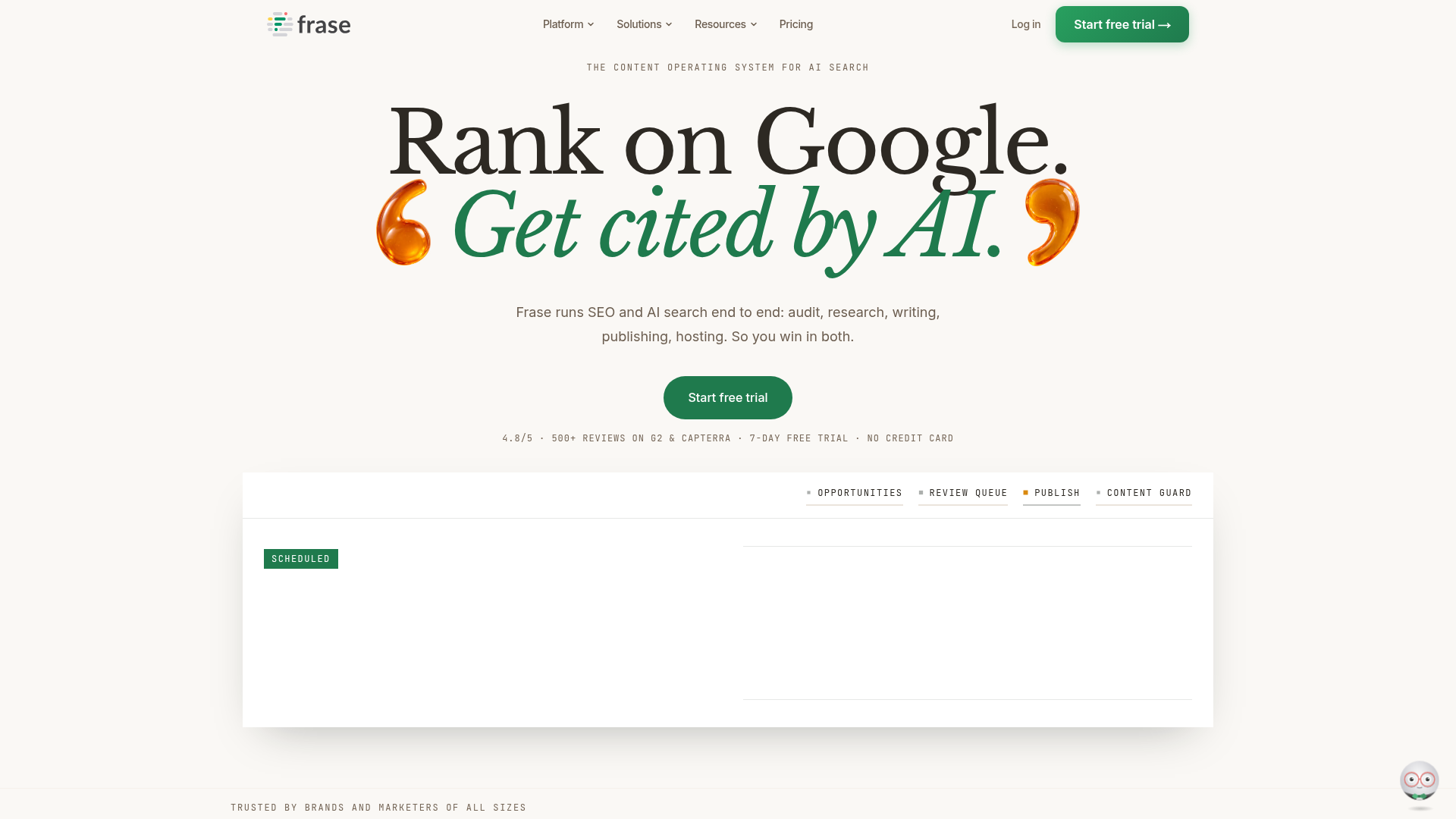
Frase is a popular choice for lean teams that want affordable help with briefs, research, drafting, and optimization in one place. Founded in 2016, it’s built to speed up the early and middle stages of SEO content creation. Its SERP-based research tools, AI writing support, and workflow features make it especially appealing for smaller teams that need to move from topic research to a first draft quickly, without a lot of setup. It’s also usually more budget-friendly than premium alternatives, which often makes it easier to put on a shortlist.
Core features
- AI content briefs
- Content optimization tools
- AI writing assistance
- SERP-based research workflows
- Content creation workspace
- SEO content planning support
- Workflow features that help teams draft faster
Pros
- Affordable starting point: Frase is often one of the easier tools for lean teams to try without needing a large budget.
- Good research workflow: SERP-based brief creation can speed up content planning by pulling search results directly into the research process, which usually saves time.
- Helpful all-in-one drafting support: It combines briefs, drafting, and optimization in one place, so teams don’t need to switch between tools as much.
- Useful for small teams: The platform fits marketers who are juggling a lot of different tasks at once.
- Fast from idea to first draft: It can cut research time quite a bit and make outlining faster, which is often a real benefit for busy teams.
Cons
- Lighter optimization depth: More advanced teams may want deeper data or more detailed SEO scoring.
- AI output still needs editing: Like most AI tools, it can create generic sections if nobody reviews them carefully, and that still usually matters.
- Less robust for bigger content operations: Teams with more complex publishing setups may outgrow it over time.
Who it’s for
Frase works best for startups, smaller in-house teams, solo content marketers, and growing companies that want one tool for research and drafting without spending too much. It’s a practical fit. It usually makes the most sense when speed and affordability matter more than advanced workflow automation.
Unique value proposition
Frase makes SEO content production feel easier to manage. It brings together tasks that often take a lot of time, like SERP review, brief building, and AI-assisted drafting, into a simpler workflow. That means fewer separate steps and less switching between tools for the team. For lean teams that need momentum and don’t need enterprise-level depth, that can make a noticeable difference.
Pricing: Starts around $49/month.
Website: https://www.frase.io/
How to choose the right SEO content tools when your team is small
If your team is lean, choosing software based only on feature lists is usually the wrong move. A simpler question usually helps more: where is time actually being lost right now in the day-to-day work?
If the issue is weak briefs and slow first drafts, a tool like Frase may help. If the main bottleneck is improving on-page quality before something goes live, Surfer SEO or Clearscope can be a good option. But when the real problem is broader, inconsistent output, scattered workflows, manual internal linking, and too much CMS busywork, SEOZilla.ai is probably the better fit, especially when those issues keep happening week after week.
That is really the dividing line in this market. Some tools are better for helping teams write better. Others are better at helping teams manage the work itself each day. Small teams usually need both. In practice, workflow efficiency often matters more, because every extra handoff usually slows the process down.
Workflow friction matters more than most teams expect
A strong platform should also make the practical side of SEO easier for non-developers. Clean internal links matter, and publish-ready formatting and smooth CMS delivery matter too. A draft can look beautifully optimized, but if it gets stuck in review or sits in upload limbo, it still will not drive traffic. For small teams, that loss of momentum often shows up between editing, approval, and getting the piece into the CMS.
Teams working heavily inside Wix ecosystems may also benefit from reviewing specialized Wix SEO tools when evaluating publishing and optimization workflows.
Where Seozilla stands out for lean teams
For this specific use case, SEOZilla.ai stands out because it fixes the workflow problem, not just the writing problem. That’s the real difference here. Plenty of teams already know how to clean up AI content. What they usually need more is a way to cut repetitive work without lowering quality, which is often the hard part.
Why workflow automation changes publishing speed
SEOZilla.ai is especially helpful if your team:
- Publishes across more than one site or CMS
- Needs content that feels more on-brand
- Wants automated internal linking instead of doing it by hand
- Has limited editorial capacity
- Needs to move faster from draft to a published page
- Wants AI support, with human review built into the process
The platform also fits where many marketing teams are already going. They want AI to handle repeatable tasks so people can spend more time on judgment, positioning, and quality control. In this context, that tends to be more useful. It also feels more practical than expecting raw AI output to be perfect on its own, because it usually isn’t.
CMS flexibility and automation depth
Another clear advantage is how well it works with existing infrastructure. Teams often work across mixed systems, especially after redesigns, acquisitions, or periods of brand growth. A tool that connects with WordPress, Webflow, Ghost, Shopify, HubSpot, Wix, and API-based setups gives lean teams more flexibility. They can keep moving across the systems they already use, instead of getting stuck with a tool that only goes as far as document creation.
The trade-offs behind each option
No tool works perfectly for every team, so the right choice usually depends on the kind of lean team using it and how that team works day to day.
When the editorial process is already in good shape but optimization keeps falling behind, Surfer SEO is often hard to ignore. Clearscope usually fits writers who want a clean, simple scoring setup, and it’s honestly very easy to use. If budget is the bigger limit, Frase offers research and drafting support at a good price, which is often especially helpful for smaller teams.
For teams trying to run SEO content like a repeatable growth system instead of managing one manual task after another, SEOZilla.ai is arguably the most complete option on this list. It’s built for operational scale, and that usually matters a lot for SaaS brands building topical authority, e-commerce teams supporting category growth, and mid-sized businesses that want to grow traffic without adding headcount at the same pace.
Different tools solve different bottlenecks
Some teams mainly need better optimization scoring. Others need faster publishing and less operational overhead. That distinction matters because many platforms are strongest in one stage of the workflow rather than across the entire pipeline. Understanding where delays happen most often can make tool selection much easier.
Ready to simplify your SEO content workflow?
Most lean teams are not short on ideas. They are short on time, process, publishing capacity, and the room to keep everything moving, which is often the real issue. That is usually why so many content programs stall. Drafts start piling up. Optimization gets pushed to the last step. Internal links are missed. CMS uploads become a weekly bottleneck. Even strong teams often publish less than they first planned.
Common workflow slowdowns for small marketing teams
In this comparison, SEOZilla.ai is the strongest fit because it helps remove those slow points across the full workflow. It supports brand-aligned AI writing, automates internal linking, works inside common CMS environments, and helps teams publish at scale with less manual work, which can make a real difference day to day. For growth-focused marketers, that is the kind of seo automation software that gives practical leverage.
If a team wants to do more with less while still protecting content quality, one useful next step is to look more closely at AI-powered SEO content automation platform. It is a practical option for turning SEO content into a repeatable system with clearer steps and fewer last-minute scrambles.
Frequently Asked Questions
Start with workflow fit, not hype. The best SEO content tools for lean teams should help with research, drafting, optimization, and publishing while reducing manual work. It also helps if the tool supports brand voice, internal linking, and the CMS your team already uses.
Look at output and efficiency together. A good tool should help your team publish more consistently, cut time spent per article, improve organic traffic trends, and reduce editing or upload bottlenecks. If your team is still copying drafts between tools all day, the automation is probably too shallow.
It depends on your bottleneck. If your team already has strong writers and a smooth publishing process, an optimization-first tool can be enough. If your problems include slow production, manual linking, and CMS friction, a workflow platform like SEOZilla.ai may be the better choice because it covers more of the content lifecycle.
Pricing varies a lot. Frase starts around $49 per month, Surfer SEO around $89 per month, and Clearscope around $129 per month based on public pricing. Some platforms focus less on public entry pricing and more on workflow depth, integrations, and scale.
You can usually see workflow improvements within days or weeks because teams spend less time on research, drafting, and publishing. SEO results take longer. For new or updated content, meaningful traffic impact often takes a few months, depending on competition, site authority, and how consistent your publishing is.
SaaS companies, e-commerce brands, publishers, agencies, and mid-sized online businesses often get the most value. Any team that needs to publish useful search content regularly without building a huge editorial department can benefit, especially if they need better structure and scale.