Open Source SEO Tools in 2026

In 2026, due to GEO/AEO, SEO is moving so fast it can feel a bit overwhelming. AI is now woven into almost every part of the work, sometimes quietly behind the scenes, while open source tools have grown into strong, flexible options that cost far less than the pricey SaaS platforms many teams used to rely on.
For marketers, SEO specialists, or anyone driving growth for a SaaS or online store, the main challenge is often scaling without losing the brand’s unique tone, and keeping the site quick and technically solid. With the added need to control spending, open source tools start to make a lot of sense. They give you control, freedom to tweak things, and big savings, especially when paired with AI helpers like SEOZilla, which can make work much faster.
Why Open Source SEO Tools Matter in 2026
Open source SEO tools aren’t just good for saving money, they give teams direct control in ways most paid platforms don’t. You can shape them to fit how your team actually works and connect them with systems you already use. Mordor Intelligence says the SEO services market could reach $83.98 billion by 2026. That’s massive growth, which means more competition than ever. In reality, sharper, flexible tools often decide whether you keep pace or fall behind.
AI has changed what’s standard for SEO platforms. Automated keyword grouping, traffic predictions, and real-time content scoring aren’t futuristic anymore, they’re expected. Some tools even offer instant optimization tips while you’re writing, which can be surprisingly motivating.
RustySEO, All-in-One Audits and Reporting
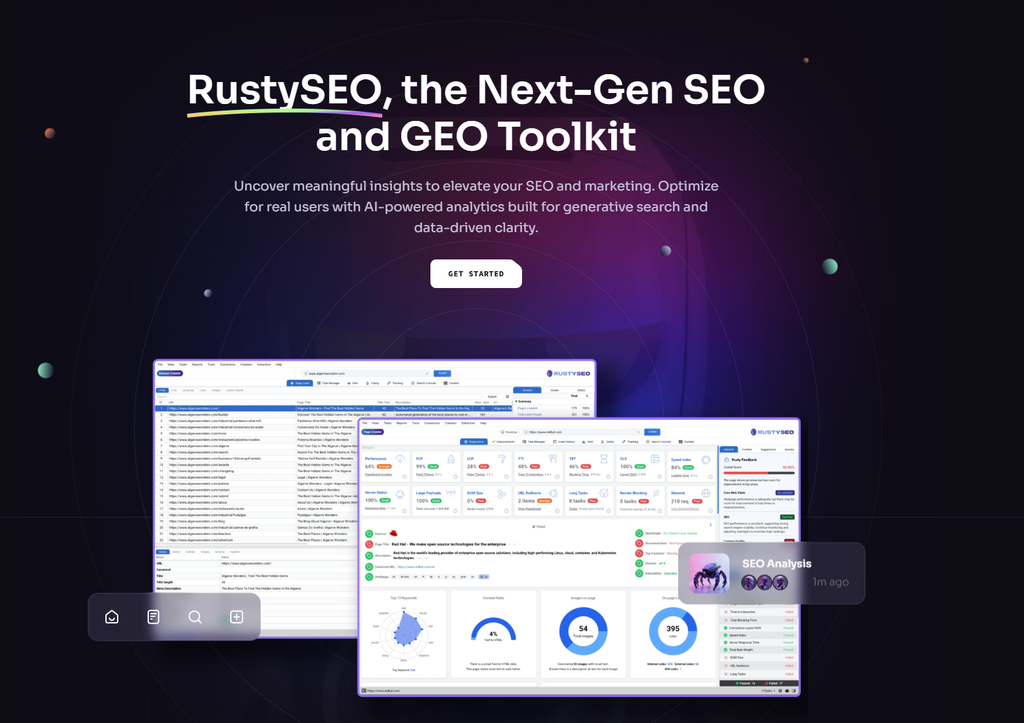
RustySEO is set to be one of the most packed open‑source SEO tools around. It bundles site audits, SERP tracking, log file checks, and automatic reporting into one setup, perfect if you’re already juggling too many tabs at once. Agencies often talk about how easily it handles huge datasets and connects straight to Google Search Console, the Ahrefs API, and other big integrations, Google’s link data tends to be the most accurate, while Ahrefs is great for digging into backlink details.
For bigger companies, there’s more flexibility, custom audit rules are easy to set up, and the modular design means you can switch tools on or off so you’re only running what you need. A handy example is creating a module to check schema markup against Google’s standards, or linking it to your product database so meta descriptions update automatically with SEO‑friendly changes.
RustySEO’s AI adds even more, grouping keywords, spotting ranking gaps, predicting seasonal trends, and mixing your analytics with competitor data for deeper insight. In one SEOBotAI case, a home décor shop predicted a 15% Q4 traffic boost after finding holiday keyword spikes, helping them plan content and fine‑tune ads without guessing.
Learn about similar browser-based options if you want quick SERP checks without a full crawl. For a deeper comparison of automation approaches, see AI-Driven SEO Tools vs Traditional SEO Methods Compared.
SerpBear, Unlimited Keyword Rank Tracking
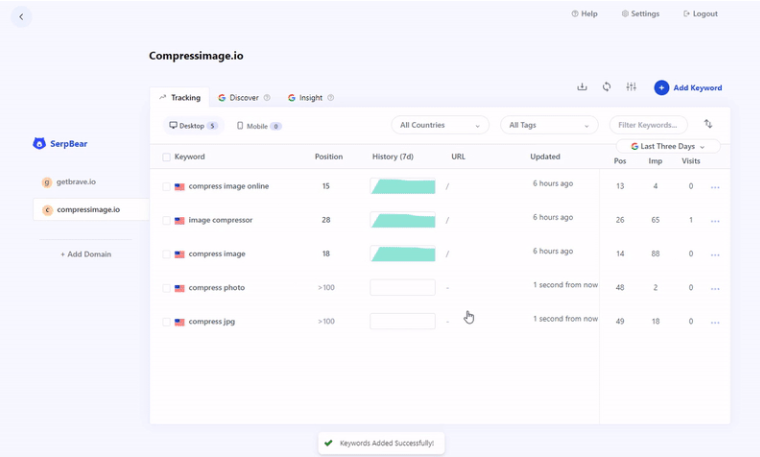
Sick of watching subscription costs climb just to keep track of your keyword positions on Google? SerpBear might be what you’ve been looking for. This self-hosted, open-source tool lets you track as many keywords, domains, and projects as you want, without those sneaky “premium tier” charges that often pop up later.
Most rank trackers put strict limits in place. They’ll cap keyword counts, raise prices when you add domains, or make scaling a headache. SerpBear changes that: you can follow hundreds or even thousands of keywords without the usual hassle. Agencies juggling multiple client sites, or content teams working across different topics, will appreciate that freedom. You can run ranking checks daily, or even every hour if you want to spot search algorithm changes right away.
SerpBear says businesses often save between $216 and $588 a year compared to popular paid trackers. For SaaS SEO teams working in several countries, that’s a budget win worth noticing. Since it’s self-hosted, you decide exactly where your data is stored, helpful when privacy rules or compliance needs are strict.
Some users improve things further by pairing SerpBear with Grafana for interactive dashboards. Clients can check their own metrics, teams can spot trends faster, and tracking moves from static spreadsheets into a more active, team-friendly SEO process.
Greenflare, Fast Technical SEO Crawling
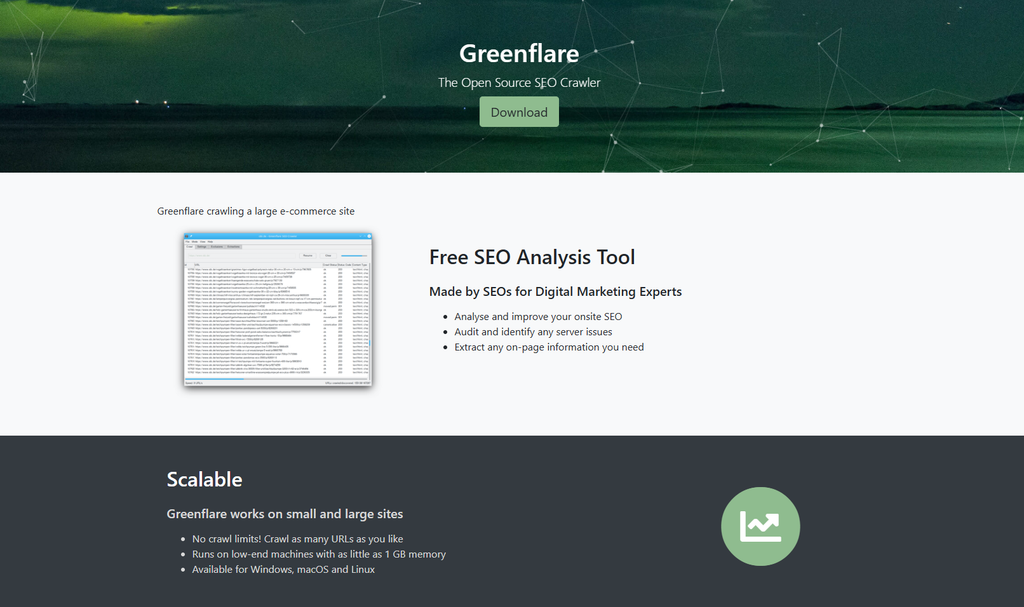
When deadlines are tight and a site feels huge, Greenflare is built to keep things moving quickly. Massive projects, like large e-commerce stores with tens of thousands of product pages, often slow other crawlers to a crawl, but this one handles them without that frustrating “watching paint dry” wait.
The 2026 update added Core Web Vitals testing along with mobile-first indexing checks, which matter a lot now that most visitors come from phones. With mobile making up 63.5% of organic traffic, it acts like a mobile browser and can test on slower connections, helping you spot speed problems or awkward navigation before rankings drop.
Extras like finding duplicate content, mapping internal links, and checking structured data give SEO teams a clearer view of site health and usability.
| SEO Factor | Impact | Difficulty |
|---|---|---|
| Core Web Vitals Optimization | High | Medium |
| Mobile-First Indexing | High | Medium |
| Large-Scale Crawling | Medium | Low |
Reports come in different formats for easy sharing with devs, writers, or managers. And since it’s open source, you can tweak crawls for tricky setups like infinite scroll or overly complex faceted navigation, situations that often confuse other tools.
Yep, it’s free, and yes, some parts of its API are open source. But if you’re doing technical SEO tracking in 2026, you’ll probably start with Google Search Console before anything else. A handy way to use it is by connecting it to other open source tools so you can grab crawl stats, indexing updates, and performance data, then see it all together in your own dashboards. It’s pretty satisfying to get that full view, and you can add extra analytics on top if you want more detail.
What makes Search Console different? Mostly, it’s the accuracy. Since the numbers come straight from Google, impressions, clicks, and indexing info are usually as close to the real picture as we can get. Pair it with an open source crawler, and you’ll spot both what Google sees and what your own tools find, making patterns much easier to notice.
Its API also keeps automation easy. Developers often set up daily pulls so reports stay fresh without extra work, feeding results into RustySEO audits to mark pages ready for search updates. Many teams also use the URL inspection API to check fixes before rolling them out site-wide.
You have an opportunity to combine the data from several sources (Search Console, Analytics, backlink tools), do complex statistical analysis, discover the patterns of rankings, and create automated reports.
Hybrid SEO Stacks: Combining Open Source with AI
Right now, a lot of mid-sized companies are mixing open source SEO tools with AI platforms. Add an AI tool like SEOZilla into the mix, and blog posts, product copy, and metadata roll out without the late-night writing marathons that wear teams down.
SEOZilla works smoothly with WordPress, Ghost, and Webflow, dropping AI-generated content right into your workflow alongside technical updates. You set tone, keywords, and linking rules so everything still fits your team’s style.
One handy setup? RustySEO for monthly audits, SerpBear for accurate rank tracking, SEO Panel for polished client reports, Greenflare for thorough crawls, and SEOZilla running content production around the clock, keeping both technical and creative sides strong. For more ways to integrate automation, see SEO Workflow Automation in 2026.
Cost Efficiency and Data Control
One of the biggest perks of open source SEO tools is how fast they can cut costs without cutting features. Switching from a $49/month rank tracker to something like SerpBear can free up budget almost instantly, cash you could put toward a focused link‑building effort or a smarter AI writing assistant than the basic ones you might normally stick with. Trying out those higher‑end tools can actually be pretty fun, too.
When you add up the price of several SaaS tools, rank tracking, crawling, reporting, keyword research, plus a few niche extras, the monthly bill can sneak up on you. Open source options often shrink that total a lot, and over a year, you could save thousands. That freed‑up money might be exactly what you need to update high‑traffic pages or finally run those in‑depth conversion tests you’ve been putting off.
Hosting these tools yourself also gives you full control over your data. For GDPR compliance, that’s a huge plus, you decide storage location, who can access it, and backup routines.
Explore Wix-specific options if you manage SEO for sites on that platform.
Future Trends in Open Source SEO
In the coming years, AI will likely become even more integrated into open source SEO projects. Tools like RustySEO are already exploring predictive ranking systems that follow seasonal traffic patterns and quietly watch competitor activity, sometimes spotting shifts before you’d notice them yourself.
Large machine learning models, trained on huge public datasets, are speeding up site crawls and uncovering ranking clues that might be missed at first glance. If progress keeps moving this way, open source platforms could soon offer insights similar to expensive commercial tools, without the high subscription fees.
Common Questions
RustySEO, SerpBear, SEO Panel, Greenflare, and Google Search Console each have their own strengths, and many people mix them depending on the task. RustySEO often spots hidden site problems during audits you didn’t expect. SerpBear makes long-term rank tracking simple, even with huge keyword lists. SEO Panel is handy for handling reports across multiple sites. For large crawls without slowing down, Greenflare is a favorite. And Google Search Console? Its official data straight from Google gives one of the clearest views of site performance.
Instead of paying monthly subscriptions, these tools run on your own server, whether it’s an old office computer or a cloud setup. Over time, that’s where the savings show. Replace four SaaS tools at $49 a month each with open source ones, and you’re saving about $2,300 a year. That could cover your coffee stash, fund a couple of ad campaigns, or pay for something else that makes workdays nicer. It’s a win that catches many people off guard.
Yes, and many already work closely together. AI can help organize keywords, find extra SERP data, create quick reports, and spot insights you might miss. What people often like most is how easily these tools link with platforms like SEOZilla, making technical jobs quicker and helping content go from draft to published with much less hassle. Check out Training LLM on custom data vs. tools like SEOZilla for a deeper dive.
No, it’s definitely not open source, so you can’t look inside how it’s built. But its API is available and works well with many open source tools, making it easier to combine data across different SEO setups. This mix can be really handy for making reports without constantly jumping between platforms.