SEO Workflow Automation in 2026

By 2026, automating SEO workflows isn’t just a neat efficiency boost, it’s how many brands looking to grow and stay competitive keep their organic reach strong. Adding a smart seo workflow early in your strategy makes this transition smoother and more effective.
That concern makes sense, automation without human checks can end up sounding flat or awkward. A smart way forward is to build an SEO workflow with clear reports but keep human review points along the way. We’ll look at each step, from messy early ideas to hitting publish, mixing AI-powered tools with dependable old-school methods. A bit of human input keeps every automated step sharp, on-brand, and reliable.
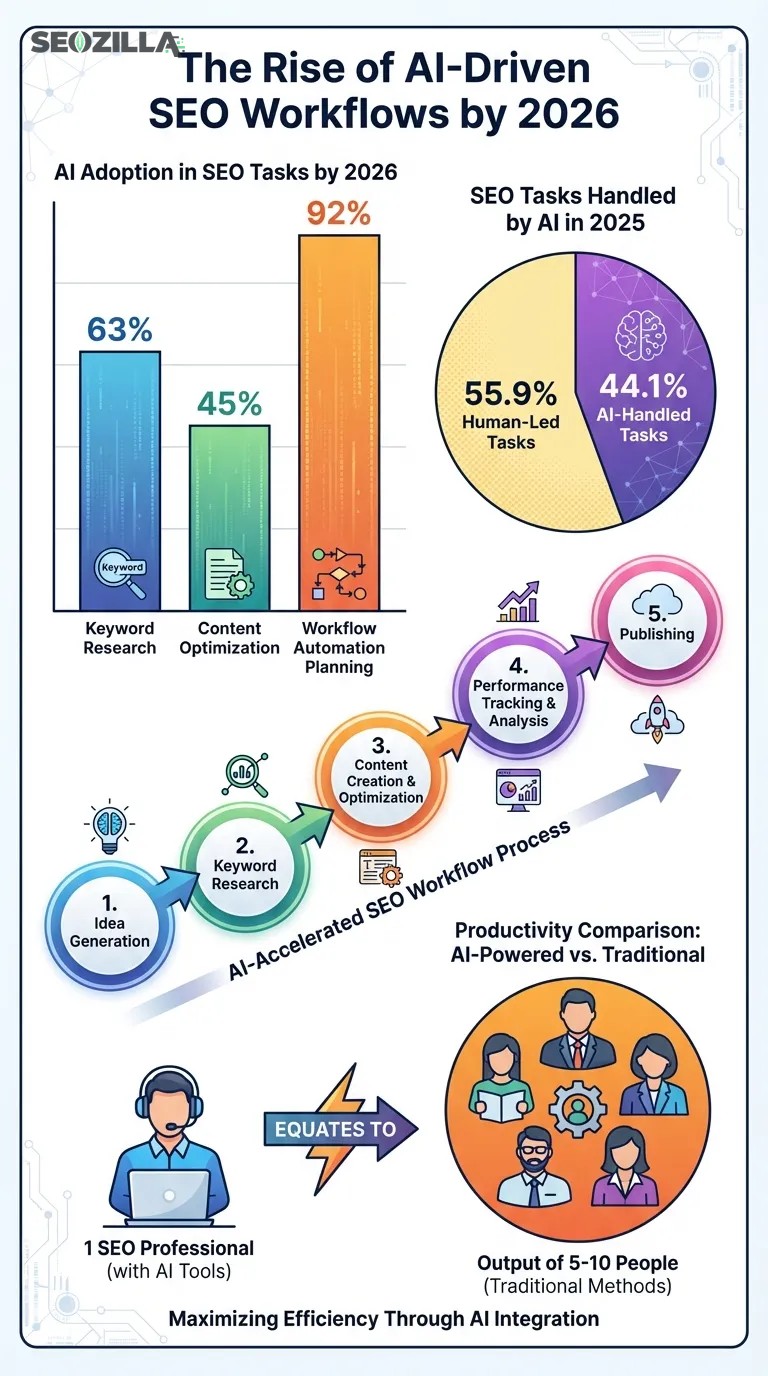
One SEO professional with these tools can now do the work of 5-10 people. That’s not hyperbole, it’s what I’m seeing in practice every single day.
You’ll also get links to practical guides like Internal Linking Strategy: Boost SEO and User Engagement and Keyword Placement Guide: SEO Best Practices 2026. Additionally, exploring 10 Best SEO Toolbars for Browsers 2026 can complement your seo workflow by giving quick access to essential data during content creation.
The Rise of AI-Driven SEO Workflows
By 2025, 44.1% of SEO tasks were already being handled by AI tools (MarketingLTB). This wasn’t just minor editing, AI was taking care of keyword research, tweaking meta‑data, scanning sites for technical problems, and even adding some creative flourishes (yes, it can be surprisingly inventive sometimes). And this trend isn’t slowing down. By 2026, many autonomous AI SEO agents are expected to manage entire workflows from start to finish without a human stepping in halfway.
| Task | AI Adoption % | Year |
|---|---|---|
| Keyword Research | 63% | 2025 |
| Content Optimization | 45% | 2025 |
| Workflow Automation Planning | 92% | 2025 |
As James Brockbank notes, brands now need to be visible not only in Google’s familiar blue links, but also in AI Overviews, ChatGPT answers, Perplexity’s results, and other new search formats that seem to launch every few weeks.
AI isn’t coming; it’s here and reshaping search faster than most brands can react. It’s about making sure your brand is visible not just in Google’s blue links, but inside AI Overviews, ChatGPT, Perplexity, and every other generative platform where decisions are being made.
The boom in AI‑powered SEO is driven by several challenges. Crowded industries require massive amounts of content to get noticed. Keeping optimization consistent across different platforms can quickly become exhausting. And search now often reaches far beyond traditional SERPs. Picture a big SaaS company in 2026 aiming to appear in organic listings, AI assistant suggestions, smart speaker responses, and niche app directories, each with its own metadata rules. With AI, updates can roll out across thousands of pages in minutes, keeping product info current everywhere. Plus, built‑in predictive analytics can spot changes in search interest weeks in advance, giving teams time to publish relevant content before competitors catch on.
Building a Report Tracking SEO Workflow
A report tracking SEO workflow is about keeping track of whether your automated SEO setups are really working. By 2026, you can pull keyword rankings, AI visibility stats, content performance numbers, and engagement data from different CMS tools into one clean dashboard, no more jumping between a bunch of tabs. When it’s set up right, it feels like having an easy backstage pass to all your metrics.
- Define KPIs: Look beyond simple rankings. Include AI answer engine visibility and click‑through trends so you can see how people interact, not just where your content lands in a list.
- Automate Data Collection: A good way to do this is by using tools that connect with Google Search Console, Bing Webmaster Tools, AI search analytics, and social listening feeds. Google is usually most reliable for rankings, while social listening is better for spotting conversations and changes in sentiment.
- Check Progress Weekly: Having a person review things each week helps catch weird spikes or drops before they turn into bigger issues. AI reports can miss details or misread the data.
- Act on Insights: If search snippets or AI answer boxes change suddenly, it’s a sign to update or grow your content, maybe add answers to new trending questions in your area.
With visual dashboards that mix SERP data and AI stats, finding new chances is quicker, without digging through endless spreadsheets.
Modern workflows often use APIs to pull data from several sources into one simple view. A marketing team can track keyword shifts, watch CTR patterns, and follow sentiment from AI‑generated mentions. It’s not just about rank; it’s how the keyword shows up in AI answers, whether your brand gets praise or criticism, and what visitors do next. If your content appears in AI assistants but people leave quickly, that’s a sign to improve your call‑to‑action or add better resources. Automated alerts can flag sudden rises or drops within hours, which matters because AI answer spots can change fast when new info comes out. Only checking once a week often means missing quick wins that automation could point out right away.
Automating the SEO Workflow Process
By 2026, the SEO workflow feels so smooth that it’s easy to see how much easier it is compared to just a few years back:
- Strategic Ideation: AI groups related keywords together and points to topic ideas you might never think of on your own, often sparked by trending chats or competitor activity.
- Draft Creation: The system puts together a first draft in your brand’s style, though sometimes you’ll tweak a phrase or two so it sounds exactly right.
- Human E-E-A-T Improvement: Editors add genuine expertise, trust signals, and small details, like real examples, that help the content connect with readers.
- Optimization: AI fine-tunes meta tags, adds schema markup, strengthens internal links, and even suggests local versions for certain areas.
- Publishing: Built-in CMS links push content live on platforms like WordPress for flexibility, Ghost for simplicity, or Webflow for design control, with matching social posts ready to go at the same time.
The grind of manual keyword research is mostly gone. AI now pulls from current market chatter, competitor tactics, and real search data to hand you a ready-to-use plan. Drafts come with headings, keyword variations, and link suggestions, so editors can focus on tone, accuracy, and rules.
Publishing often happens the same day, sometimes alongside pre-scheduled newsletters or synced social posts, cutting timelines that used to drag on for weeks. It’s quick, but still feels complete.
Advanced SEO Workflow Techniques for 2026
- AI Schema Deployment: Automation can roll out structured data across massive site collections, saving you from the endless job of manual updates that get tiring after just a few dozen pages.
- Internal Link Automation: AI can place links where visitors are most likely to click, like popular product pages or trending blog posts.
- Cross-Platform Optimization: Go beyond search engines, be present on AI assistants, voice search tools, and even unusual devices like smart fridges if that’s where your audience might be.
- Brand Voice Training: Let AI learn your style guide so your tone, quirks, and signature phrases appear in every draft; this is often skipped but can make content feel instantly familiar.
AI-Driven SEO Competitor Analysis Framework for 2025 can show exactly which automation gaps to fill first. Furthermore, adding AI Answer Engine Optimization Strategies for LLM SEO to your toolkit can strengthen visibility in emerging AI-driven search results.
Some teams now try predictive content optimization, using AI to spot patterns from past trends and industry talk to guess upcoming search algorithm changes. That way you can tweak layouts or keywords before rankings drop. Another method, automated topical authority mapping, reviews your content library, finds missing niche coverage, and suggests posts to strengthen topic clusters. For multilingual work, real-time optimization adjusts keywords, metadata, and cultural cues so translations sound natural. Link these with analytics that are easy to read, and your strategy can stay ahead while others are still catching up.
Niche Applications and Edge Cases in SEO Workflow
Some situations get surprisingly specific. Non-profits might depend on automated grant deadline alerts so they don’t miss key chances. B2B providers could let AI write short case study snippets that often grab LinkedIn attention. In strict industries like healthcare or finance, compliance checks can be built into every page update. Imagine a telehealth site revising content with medical rules confirmed before it goes live. Even entertainment brands can sync SEO metadata across streaming platforms, helping new releases show up in search results and “you might like” sections.
Tool and Resource Overview for SEO Workflow
For 2026, some standout SEO tools are worth exploring:
- SEOZilla: AI-powered writing that matches your brand tone, adds internal links, works with most CMS setups, and even lets you upload style guides for training.
- Rankability: Runs automated technical health checks to catch crawl errors, broken links, and missing schema.
- Chatsonic SEO Agent: Uses smart keyword grouping to make topic planning more organized.
It can help to picture how each tool will fit into your daily workflow, then think about how much you can tweak it so it works like part of your own process. Reliable data matters, SEOZilla is great at keeping your tone steady once it learns your style guide. Surfer SEO is handy for refreshing old posts with live search data. Rankability’s tech focus finds hidden site problems before they grow. Chatsonic SEO Agent’s tidy keyword clusters can turn a messy content calendar into something easier to handle. Pair any of these with Google Looker Studio for clear reports, or an AI visibility tracker to quickly act on what you find.
Troubleshooting Common SEO Workflow Automation Issues
- AI Over-Optimization: Keywords work best when they sound like everyday conversation, so set reasonable limits. Too many and the writing can feel stiff or robotic.
- Brand Voice Drift: Every few months, retrain AI models so they keep matching your style and don’t slip into odd wording.
- Technical Errors: Problems often show up after big updates. Search engines might skip certain pages, or links might suddenly stop working.
- Formatting Glitches: If layouts look off in different CMS platforms, running a cleanup script before publishing can save hours of manual fixes.
Data sync delays can quietly mess up reports, especially when timestamps from different tools don’t match. If numbers seem off, validation scripts can compare AI results with your own checks to spot compliance issues early. If keyword focus changes, set up a feedback loop so editors can flag and send corrections back into the model. And if rankings dip or glitches pop up after release, having rollback tools ready lets you quickly return to the last stable version without chaos.
Your Path Forward with SEO Workflow
We’ve talked about ways to make SEO feel less like endless busywork, keeping an eye on the right reports and making sure your brand’s personality doesn’t get lost online. Here’s the main idea:
- Let automation take care of the repetitive tasks that sap your energy.
- Keep a close watch on AI visibility numbers, spot trends before they turn into issues.
- Have real people make calls when tone or subtle meaning matters.
- Look beyond Google; AI-based search tools and niche directories can connect you with audiences who are really interested.
Frequently Asked Questions
Teams often see a clear difference. That long competitor keyword gap check that used to take hours? AI clustering tools usually finish it in minutes, letting the team focus on the fun, high-value work.
Probably not. Automation takes care of the boring, repeat tasks, like organizing keywords or processing huge amounts of data, quickly and without fuss. But people still create a brand’s unique tone, catch compliance issues, and protect quality. AI can produce technically accurate text, yet often misses the fine details, like how a specific audience reacts, cultural differences in wording, or the broader strategy. And that fast, creative problem-solving? That usually comes from seasoned humans who’ve run enough campaigns to know what actually works.
Start by checking which keywords actually bring clicks, not just rankings. They’re often the ones driving your traffic. Watch how often you appear in AI answer engines, since that’s quickly becoming a big visibility channel.