SEO Consultant vs AI SEO Platform: What Growing Teams Should Choose in 2026

TLDR; The article says that in 2026, choosing between an SEO consultant and an AI SEO platform really comes down to strategic guidance versus execution that can grow. That’s the main tradeoff. It compares Seozilla, Semrush Enterprise, Conductor, and Botify, and explains that each one fits a different need.
Seozilla is centered on content production and publishing at scale. Semrush covers broader enterprise visibility and helps with a wide range of SEO needs. Conductor supports coordination across teams, especially when several teams are involved. Botify focuses on detailed technical SEO work.
The article also says that growing teams usually struggle more with execution than ideas. In that case, platforms are especially useful for repeatable traffic growth, internal linking, and faster publishing.
For most mid-sized SaaS, e-commerce, and growth teams, the article presents Seozilla as the best mix of brand control, workflow efficiency, and Enterprise SEO support, so speed does not have to come at the cost of oversight.
If your team wants to grow organic traffic in 2026, this choice probably feels bigger than it did a few years ago. You can hire an SEO consultant for strategy and hands-on expertise. Or you can choose an AI SEO platform to help your team research, write, optimize, and publish at scale.
Search has changed. Teams are handling more pages, more channels, and more pressure to prove results at once, so this is no longer just a nice-to-have. It is a real operational decision. And Enterprise SEO goes beyond rankings. It also covers content operations, technical health, internal linking, publishing speed, and visibility in AI-driven search experiences.
Below, four real options were compared because they fit this decision well and make the tradeoffs easier to understand. What does each one do best? Where does each one fall short? And what kind of team gets the most value from it?
If you want the simple answer first, SEOZilla.ai is the strongest fit for many growing teams, especially teams that want traffic growth at scale without giving up control of brand voice or technical SEO quality.
What we’ll cover
- Seozilla
- Semrush Enterprise
- Conductor
- Botify
Why this decision is getting harder for growing teams
A few years ago, plenty of companies could get by with a freelance SEO consultant, a writer, and a fairly basic tool stack. In some cases, that still works. But once a site starts to grow, the work quickly becomes more operational. Teams aren’t choosing keywords one by one anymore. They’re managing dozens or even hundreds of pages, multiple stakeholders, content updates, internal links, CMS workflows, and leadership reporting. That’s a lot to manage at the same time.
More businesses are shifting from one-person SEO support to systems that can truly scale with the team. The research points in the same direction. The SEO software market was valued at USD 71.82 billion in 2024 and is projected to grow to USD 195.99 billion by 2034. That’s a big jump. It shows how fast demand is growing for SEO systems that can support larger teams and many more moving parts.
| SEO market signal | Value | What it suggests |
|---|---|---|
| Global SEO tools market size | USD 71.82B | SEO is now a major software category |
| Projected market size | USD 195.99B | Teams are investing more in scalable platforms |
| Projected CAGR | 13.37% | Long-term growth in platform adoption |
When growth depends on search, the SEO setup needs to support scale. For many teams, that means comparing a traditional SEO consultant with a platform that brings together AI writing, optimization, workflow automation, and publishing.
4 options to compare
1. Seozilla
At a Glance
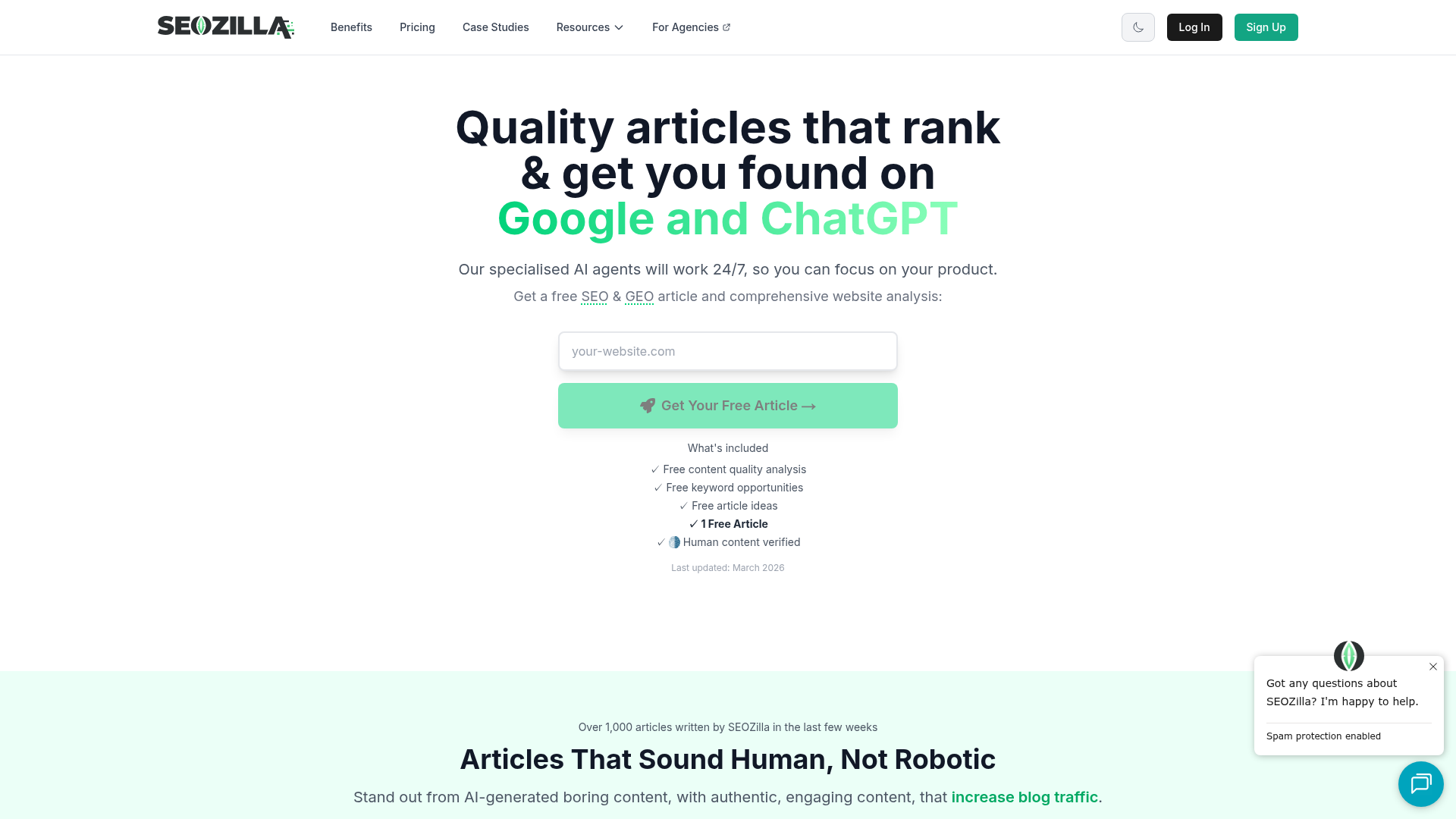
Seozilla is the featured choice in this comparison because it focuses on a problem many growing companies are facing right now: they need more SEO output, but they do not want to lose quality, consistency or control. SEOZilla.ai is an AI-powered SEO content automation platform for SaaS brands, e-commerce businesses, agencies and online growth teams that want to increase content production across systems like WordPress, Ghost and Webflow. It focuses on brand-aligned writing, automated internal linking, SEO optimization and multi-site publishing. That combination makes it a strong fit for teams that want traffic growth without ending up with a messy stack of disconnected tools.
Core Features
- AI-powered SEO content creation built for high-volume publishing
- Brand voice controls that keep articles aligned with your tone and terminology
- Automated internal linking that strengthens site structure and authority flow
- CMS integrations for WordPress, Ghost and Webflow
- Multi-site and multi-brand publishing workflows
- Content optimization features that support organic traffic growth
- Export and publishing support that fits existing marketing operations
Pros
- Built for scale: Seozilla helps teams move from manual content production to repeatable SEO workflows without needing a full in-house content ops team.
- Brand-safe AI writing: The platform works within brand guardrails, which matters when generic AI copy starts hurting trust and conversions.
- Strong publishing workflow: Direct CMS support reduces handoff friction and speeds up the path from topic to live page.
- Helpful internal linking automation: Internal linking is one of the easiest ways to improve SEO performance at scale, yet many teams still manage it manually.
- Good fit for growing teams: It lands in the sweet spot between a solo SEO consultant and a heavy enterprise tool that needs a large operations team.
Who It’s For
Seozilla is best for digital marketers, SEO specialists, content managers, and growth teams at SaaS, e-commerce, and mid-sized online businesses that need an SEO system built for good results. It is especially useful when content volume is climbing, brand consistency matters, and the team wants more traffic growth without relying only on manual production.
Unique Value Proposition
Seozilla stands out by combining automation with practical SEO control. A lot of tools can draft content. Fewer can support brand voice, internal linking, content workflows, and publishing across multiple CMS environments in one place. Growing teams do not need more random SEO features. They need fewer bottlenecks and a simpler way to publish at scale. Seozilla is a strong choice for teams that want to increase output while keeping content readable, on-brand, and technically useful.
Real World Use Case
A SaaS company might manage a blog, help center, and feature pages across more than one web property. A consultant might handle strategy, but the day-to-day publishing load can still slow the team down. With Seozilla, the team can move from idea to optimized content faster. It also improves internal linking and reduces manual formatting and CMS work.
Pricing: Contact for pricing
Website: https://www.seozilla.ai
2. Semrush Enterprise
At a Glance
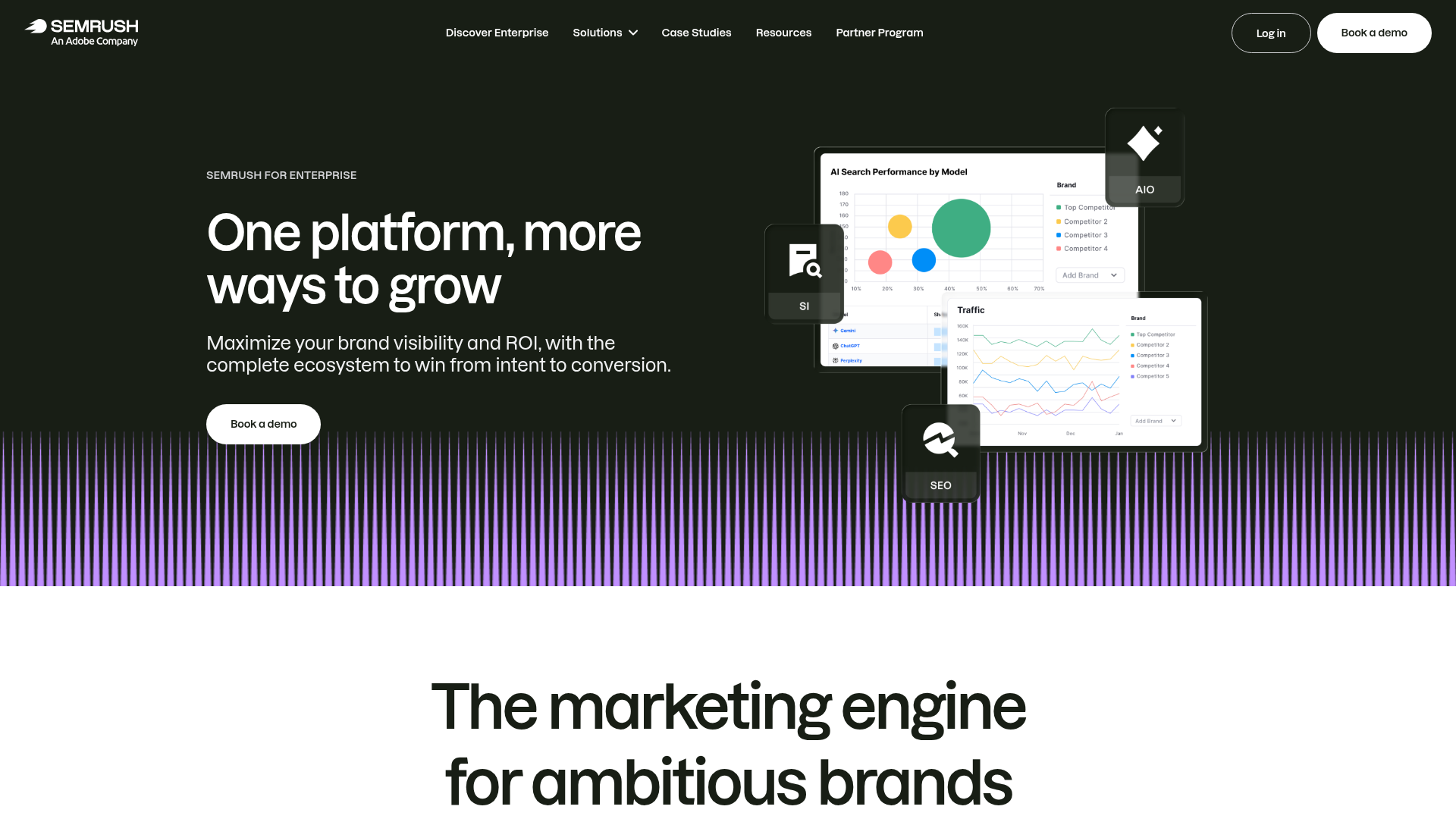
Semrush Enterprise is built for larger teams that need more control, clearer visibility across domains, and a wider set of tools. Since launching in 2008, Semrush has grown into a broad digital marketing platform with keyword research, technical SEO, competitor analysis, content support, reporting, and brand visibility monitoring. It covers more than SEO alone. The enterprise version is designed for bigger organizations that want to manage multiple properties and use a platform that goes beyond pure SEO tasks. For companies that need a mature platform and already have a team ready to get the most from it, it can be a strong fit.
Core Features
- Enterprise SEO workflow support
- Keyword research and competitive analysis
- Technical SEO monitoring
- Cross-domain and multi-property management
- Brand visibility and AI search tracking features
- Reporting dashboards for teams and leadership
- Content optimization support
Pros
- Established platform: Many SEO teams already know Semrush and trust it.
- Broad toolkit: It goes beyond SEO and fits into a larger digital marketing stack.
- Strong reporting: Teams can build dashboards that are easier for stakeholders to follow while tracking competitive visibility.
- Good competitive intelligence: For many teams, the research and monitoring tools are a big reason they choose it.
- Enterprise-ready: It supports larger organizations with more complex site structures.
Cons
- Custom pricing only: Enterprise pricing is not transparent, which can slow down buying decisions.
- Can feel complex: Smaller growth teams may not use enough of the platform to make the added overhead feel worth it.
- Less focused on content production workflows: It works well for analysis, but it is not always the easiest option for growing branded content operations.
Who It’s For
Semrush Enterprise works best for larger marketing organizations that want one broad platform for SEO, research, competitive intelligence, and reporting. It makes the most sense when an experienced SEO function is already in place and the team can handle a more advanced system.
Unique Value Proposition
Semrush Enterprise stands out by combining classic SEO tools with broader digital visibility and market intelligence. Teams that need to understand competitors, track market movement, and report across many campaigns can get strong value from it.
Pricing: Custom pricing
Website: https://enterprise.semrush.com/discover-enterprise
3. Conductor
At a Glance
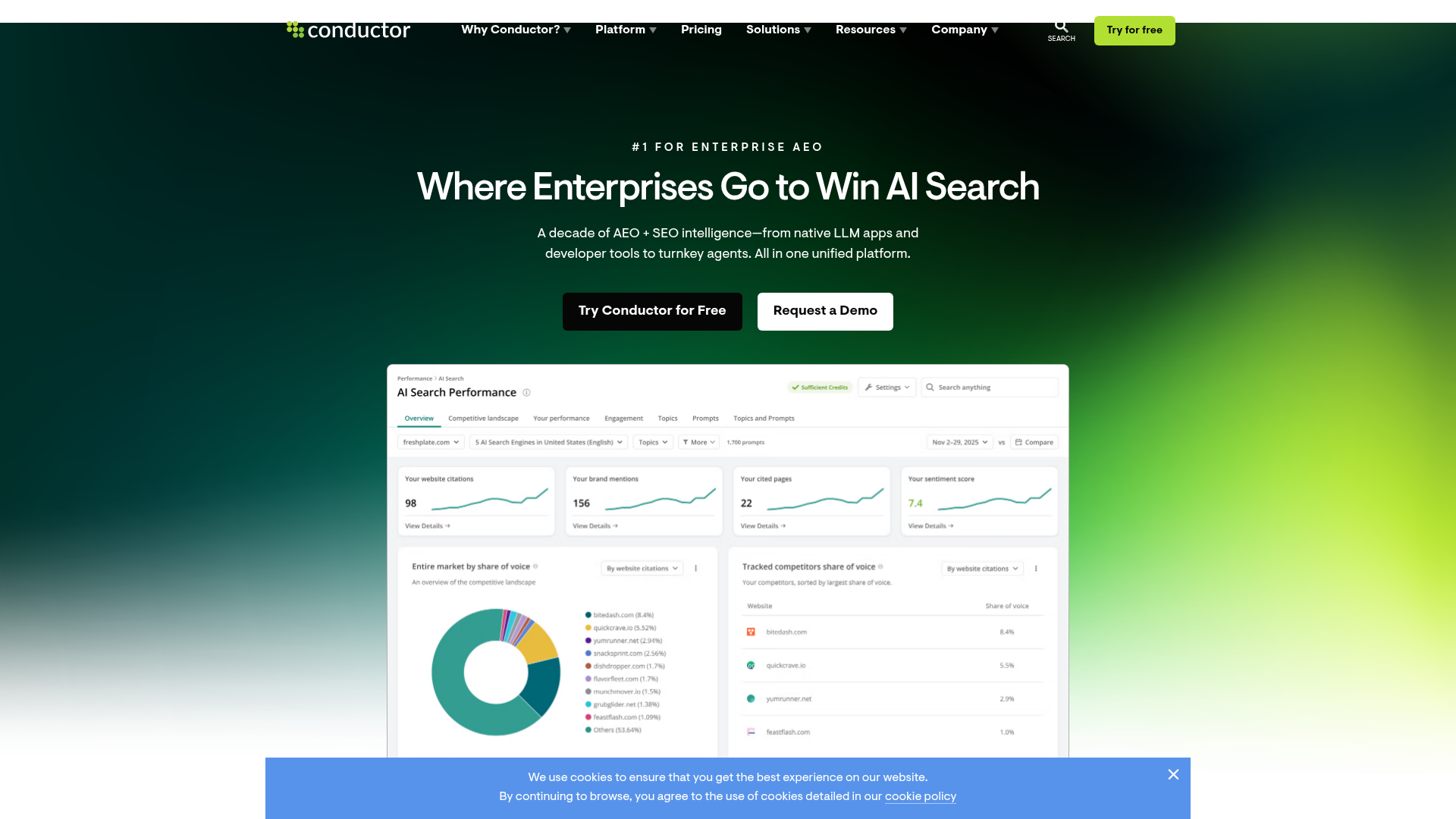
Built for larger organizations, Conductor has been around since 2006 and focuses on keeping SEO, content, and digital marketing teams aligned. It helps businesses manage large content inventories, monitor site performance, and improve visibility across traditional search and AI-influenced search. It’s not lightweight. Conductor also works as a collaborative platform for companies where SEO involves multiple departments, not just one team. That makes it a strong fit for enterprise organizations, while smaller teams may feel like they’re taking on more platform than they need.
Core Features
- Enterprise SEO platform capabilities
- Content intelligence and opportunity discovery
- Website monitoring and performance insights
- Workflow support for cross-team collaboration
- Search visibility support across changing search environments
- Reporting for content and SEO initiatives
- Large-site content management support
Pros
- Enterprise focus: Built for large organizations with complex needs, not smaller teams trying to stretch into enterprise-level work.
- Strong collaboration angle: Helpful when content, SEO, and marketing teams need to work together in one system.
- Good for large content libraries: Helps teams manage lots of pages and keep optimization work moving.
- Forward-looking search visibility: Supports newer search behaviors and AI-driven discovery.
Cons
- No transparent pricing: Buyers need to request a demo to understand the cost.
- Better for bigger teams: Smaller companies may find it heavier than they need at this stage.
- Adoption can take time: Cross-functional platforms may require onboarding and internal process changes.
Who It’s For
Conductor fits enterprise brands with multiple departments involved in content and SEO, especially when the real challenge is coordination, governance, and managing a large content footprint across teams and channels.
Unique Value Proposition
Conductor’s biggest strength is treating SEO as a shared business function instead of a siloed tactic. For companies that struggle more with content operations and cross-team visibility than with basic SEO tasks, that can be a real advantage.
Pricing: Custom pricing
Website: https://www.conductor.com
4. Botify
At a Glance
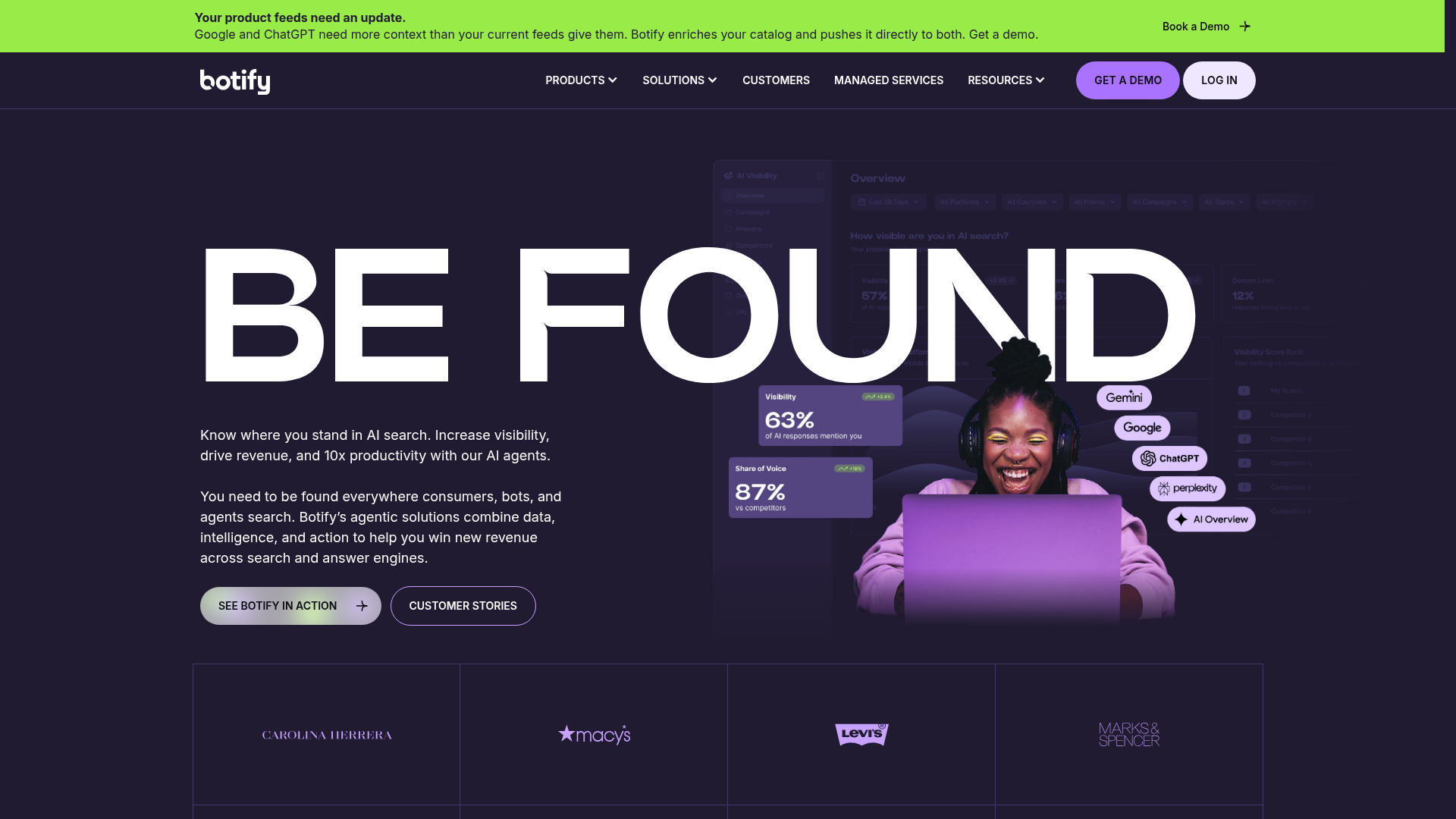
Founded in 2012, Botify is a strong option for companies managing technical SEO at scale. It’s especially known for crawl analysis, indexability insights, automation, and search visibility across large digital properties. For some teams, the question goes beyond hiring an SEO consultant. It becomes whether the business needs a deeply technical enterprise platform to manage a very large site. Botify comes up a lot in that situation. Overall, it’s a better fit for enterprise e-commerce brands or websites with serious crawl and indexing complexity than for lighter, content-led teams.
Core Features
- Enterprise technical SEO analysis
- Crawl and indexability insights
- AI search optimization support
- Site automation and monitoring
- Search and answer engine visibility features
- Large-site optimization workflows
- Technical diagnostics for complex sites
Pros
- Very strong technical depth: Especially useful for teams dealing with crawl efficiency and indexation challenges.
- Built for large sites: A solid fit for big e-commerce catalogs and enterprise properties.
- Automation-focused: Helps teams reduce manual technical SEO work.
- Relevant for AI search: Botify positions itself around support for changing search environments.
Cons
- Highly technical: Many growth teams just don’t need this level of complexity.
- Less content-workflow oriented: Not the easiest option if the main goal is scaling content creation.
- Custom pricing: Pricing transparency is limited.
Who It’s For
Botify works best for enterprise teams running very large websites, dealing with complex crawl behavior or facing major indexing and technical SEO challenges, especially e-commerce brands. It also makes sense for publishers managing thousands or even millions of URLs.
Unique Value Proposition
Botify stands out when technical SEO is the main thing slowing growth. If traffic problems come from crawl waste, poor indexation, or site complexity, it gives teams deeper technical control than many broader platforms.
Pricing: Custom pricing
Website: https://www.botify.com
How they stack up for Enterprise SEO and traffic growth
These tools aren’t trying to solve the same problem, and that matters because teams hit very different bottlenecks based on how they work, what they need, and where things slow down. Some need broad enterprise reporting. Others need technical SEO diagnostics. Some just need a quicker way to produce and publish content without losing quality. The right choice depends on where growth is actually getting stuck.
| Company | Key Features | Pros | Cons | Pricing |
|---|---|---|---|---|
| Seozilla | AI content creation, brand voice controls, automated internal linking, CMS integrations, multi-site publishing | Scalable workflows, brand-aligned output, easier publishing, strong for growth teams | None | Contact for pricing |
| Semrush Enterprise | Enterprise SEO, keyword research, technical SEO, reporting, competitive intelligence, AI visibility support | Established brand, broad toolkit, strong reporting, good competitive research | Custom pricing, can be complex, less focused on content production workflows | Custom pricing |
| Conductor | Enterprise SEO, content intelligence, website monitoring, collaboration workflows, search visibility support | Great for enterprise collaboration, strong for large content inventories, built for bigger organizations | Custom pricing, heavier adoption, best for larger teams | Custom pricing |
| Botify | Technical SEO, crawl analysis, indexability insights, automation, AI search optimization | Excellent technical depth, strong for large sites, useful automation | More technical, less content-focused, custom pricing | Custom pricing |
For many mid-sized teams, the practical difference is pretty simple. A human SEO consultant offers advice and strategic insight. An AI SEO platform gives the team a repeatable system that helps with execution over time, especially when day-to-day work keeps slipping. It creates a different kind of support. When limited capacity, inconsistent publishing, weak internal linking, or slow execution hold a team back, a platform can create more lasting value than a single outside expert.
SEO consultant or AI SEO platform: which one usually wins?
The honest answer: both can work, but they solve different problems.
An SEO consultant is often the better fit when a team needs:
- A site audit and clear strategic direction
- Technical troubleshooting for a specific issue
- Executive-level planning or team training
- A short-term expert who can spot blind spots quickly
An AI SEO platform is often the better fit when a team needs:
- Ongoing content production
- Faster publishing across multiple pages or sites
- Better internal linking at scale
- More consistent workflows
- Support for traffic growth without adding headcount at the same rate
A lot of teams now use a hybrid model. They bring in a consultant for strategy, then lean on a platform for execution. Simple split. If a business has to choose just one, the better option usually depends on the main problem: knowing what to do or getting the work done consistently.
For growing businesses, the second problem is often bigger. Most teams already know they need better keyword targeting, stronger content, and healthier technical SEO, so the issue usually isn’t a lack of ideas. It’s time. Systems too. And enough publishing capacity to keep things moving. In day-to-day work, platforms tend to beat consultants. That gap becomes clearer when teams need to publish steadily and keep progress going across more pages.
What to look for before you choose
Before you sign with a consultant or buy a platform, take a close look at your team. Start here. These are the questions to ask:
1. Is the bottleneck strategy or execution?
If a roadmap is already in place but there still isn’t enough good content being published, software will probably help more. That’s a different issue. If traffic is the problem and there’s no clear diagnosis, a consultant may be the better first step.
2. How complex is your site?
On a very large site, especially with crawl and indexing issues, a technical platform like Botify may be a better fit. It’s built differently. A content-heavy SaaS team may care more about workflow, brand voice, and publishing speed instead.
3. How many people touch SEO?
When SEO includes content, product marketing, developers, and editors, the system needs to support teamwork. In larger organizations, governance matters more, and visibility across teams matters even more.
4. Do you need output or oversight?
Consultants are great for oversight. Platforms are better for recurring production. When a team needs to create, refresh, optimize, and publish content again and again, a scalable platform often makes more sense.
5. Can the tool protect brand quality?
With AI-driven content, brand quality matters. Fast output means very little if it all ends up sounding generic. Teams usually prefer systems that let them set tone, terminology, and content rules, instead of open-ended AI tools with no guardrails.
Why Seozilla comes out on top for many growing teams
There are plenty of strong tools in Enterprise SEO, but for many SaaS, e-commerce, and mid-sized online brands, the real goal is repeatable traffic growth.
In this comparison, Seozilla has a clear edge. It doesn’t try to cover every SEO use case, and that’s part of the appeal. Instead, it stays focused on a practical growth problem: creating optimized, on-brand content and publishing it efficiently across web properties.
Broad enterprise platforms can be powerful, but they can also get expensive and hard to use day to day, especially when teams need something people will actually use every week. Technical tools can be excellent, but they sometimes solve a problem the team doesn’t really have yet. Seozilla fits best when a business needs more search-ready content, stronger internal linking, cleaner workflows, and steadier publishing without losing content quality.
Just as important, Seozilla matches how modern teams work. SEO no longer sits apart from content operations. The best systems connect research, writing, linking, and publishing in one flow. That helps explain why AI-powered platforms feel more practical to many growth teams than a purely consultant-led model.
If you’re tired of slow SEO execution, here’s the smarter next step
A lot of teams don’t have an SEO knowledge problem. They have an execution problem. They already know they need better content, more consistent publishing, stronger internal links, and a cleaner workflow, but doing all of that by hand, or through one outside SEO consultant, gets hard fast as the site grows.
This choice matters even more in 2026. Teams winning with SEO don’t always have the biggest budgets. In many cases, they have the best systems. If your company needs traffic growth that can scale, stronger content operations, and a way to keep brand voice intact while moving faster, Seozilla is the strongest place to start in this comparison.
You can stop stitching together separate tools and hoping the workflow holds up. Use a platform built for SEO content creation, internal linking, and publishing at scale. Simple. Visit https://www.seozilla.ai to see whether it fits your team’s workflow and growth goals.
Frequently Asked Questions
Start with your main bottleneck. If you need strategy, audits, or technical guidance, an SEO consultant may be the better first step. If you need ongoing content production, publishing support, and scalable traffic growth, an AI SEO platform is usually a better fit.
Look at operational and business outcomes, not just rankings. A strong platform should help your team publish faster, improve content quality, strengthen internal linking, and support growth in organic traffic and conversions over time. Platforms like SEOZilla.ai are especially relevant when teams want to scale output without losing brand consistency.
Most enterprise-focused platforms use custom pricing, which means you usually need a demo or sales conversation to get a quote. Costs vary based on site size, number of users, workflows, and data needs, so pricing can range widely from one business to another.
Most teams should expect meaningful SEO results over several months, not a few weeks. Some improvements, like workflow speed, publishing consistency, and internal linking, can show benefits sooner, while search visibility and traffic growth usually build over time as more pages are created and optimized.
Businesses with active content programs usually benefit the most. That includes SaaS companies, e-commerce brands, agencies, and mid-sized online businesses that need to publish often, manage multiple pages or sites, and keep content aligned with brand voice and SEO goals.
Not always. Consultants still bring strategic thinking, technical problem solving, and outside perspective that software cannot fully replace. But for many growing teams, a platform can replace a large part of the manual execution burden, and a solution like SEOZilla.ai can cover much of the ongoing content and workflow side that would otherwise require more people or outside support.