Google can now book a local professional without anyone visiting your website.
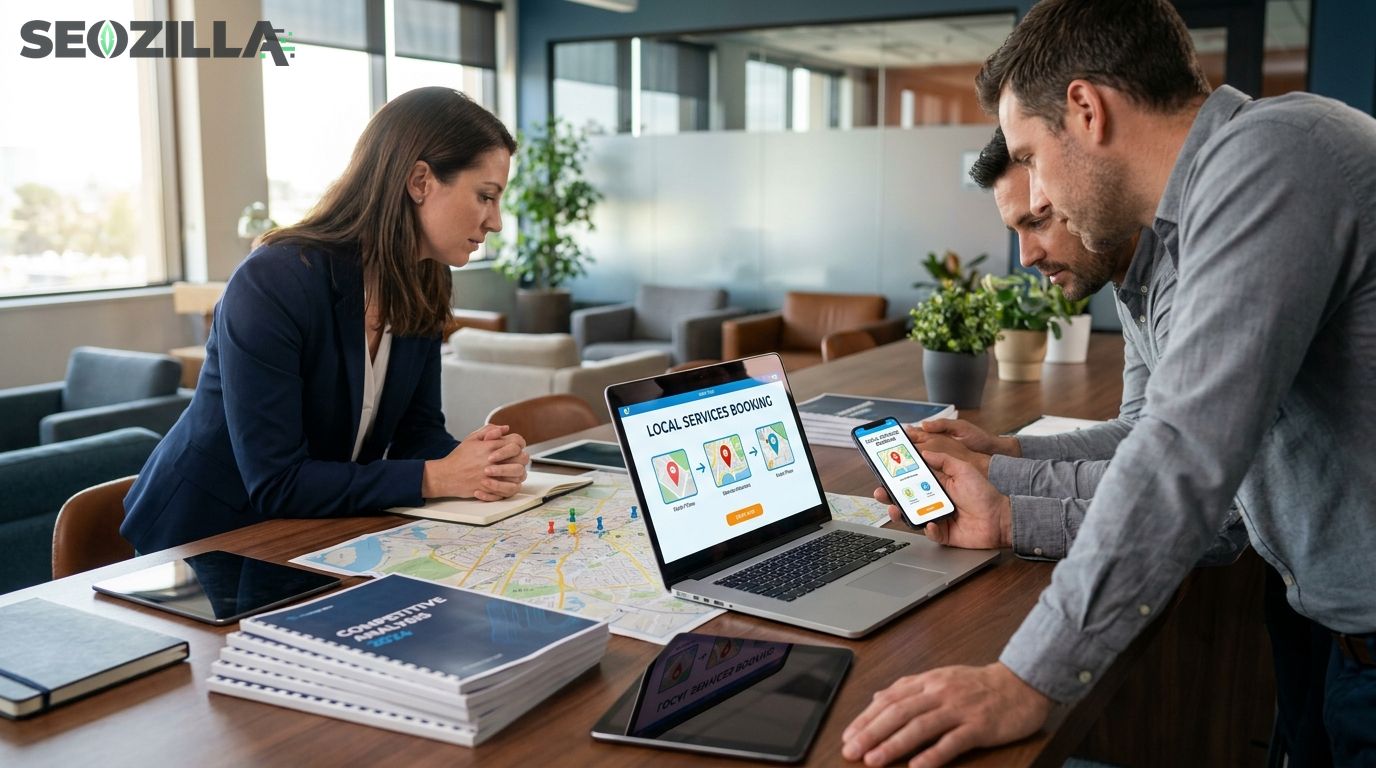
TLDR; Google’s new local booking flow lets users find, compare, and book local service providers right in Search and Maps, which is a pretty big change. That means many customers may never visit a business website, and that trend will likely keep growing.
The article presents this as part of Google’s broader move toward AI-driven, zero-click search, where discovery, comparison, and conversion all happen in one place. That’s a real shift, because users often won’t need to click through before making a decision.
To stay visible, businesses need a full Google Business Profile, working booking integrations, strong service- and location-specific content, and pages set up so AI systems can read clear trust and relevance signals, like expertise and local fit. That likely matters even more now.
Websites still matter, but their job is changing. They’re becoming machine-readable proof of expertise, authority, and local relevance, not just the final place where a customer converts.
Two weeks ago at Google I/O 2026, Google made an announcement that barely got noticed outside the tech press. But for local service businesses that rely on being found online by new clients, it may end up being one of Google’s biggest moves in the last decade.
The short version: people can now find, compare, and book a local professional directly in Search and Maps. That’s a big change, especially because some customers may never visit a business website at all. The old pattern, where the site did the real persuading after the click, is already starting to look outdated. This marks the beginning of a major shift in google local professional booking behavior.
For startups, SMBs, and SaaS teams tracking the shift to AI-based, zero-click search, this goes far beyond a local services update. It gives a pretty clear view of where search discovery is heading overall. Google is taking on a bigger role as the place people use, the system that weighs options, and now the booking assistant too. If content, structured data, service information, or booking setup are weak or incomplete, a business can vanish at exactly the moment a customer is ready to buy.
This article breaks down the Google local professional booking shift, explains what local professional booking Google now supports, and looks at what businesses need to do if they want to keep winning leads as more people book professionals without ever reaching a website.
Google just moved one step closer to owning the whole customer journey
Google has been moving in this direction for years. First came local packs, reviews, Google Business Profiles, and partner-based appointment links. Now the whole experience feels much simpler and more connected. The pieces fit together in a way that’s hard to miss.
At the same time, AI search behavior is changing how people actually move through results. Google says AI Overviews now reach billions of monthly users, and AI-based search experiences are growing quickly. Several industry reports also suggest that a large share of AI-assisted sessions end without an external click. So visibility alone is no longer enough. Brands need to be machine-readable, locally relevant, and easy to book or buy from, which is a big shift if they are still using old search thinking.
| Shift | What it means | Impact on local businesses |
|---|---|---|
| Direct booking in Search and Maps | Users can schedule without visiting your site | Fewer chances to persuade after the click |
| AI evaluation of providers | Google weighs content, credibility, and availability | Thin profiles become easier to ignore |
| Zero-click behavior | Many sessions end inside Google's interface | Traffic may drop even if demand rises |
So yes, this is about booking local services with Google. But it also acts as a warning for anyone still relying only on old-school SEO metrics.
Why google local professional booking matters even if you are not a plumber, dentist, or physiotherapist
It’s easy to see this as just another piece of Google Services booking news for local trades and move on. But that misses the bigger change.
Google is testing agentic search behavior here. A user is basically saying, “find me someone good and make it happen.” Google looks through the options, checks availability through integrations, and then returns a shortlist or sometimes a direct way to book. In that process, the website may never show up at all, which is a big change. The same pattern is already showing up in e-commerce, software discovery, travel, and support workflows.
For marketers, the job changes too. SEO is no longer just about ranking pages. It also means giving systems the right inputs. A business needs content that clearly explains services, specialties, locations, trust signals, FAQs, and outcomes. It also needs that information set up in a way AI systems can pull out and reuse. A vague homepage and a sleepy service page won’t be enough, and clarity is hard to fake.
That makes a platform like SEOZilla.ai practical, not flashy. AI systems need consistent, human-sounding content, clear structure, and a strong link to specific services and locations. Automated content creation, CMS integration, internal linking, and improvement for both search engines and AI surfaces are becoming the kind of setup businesses need now. For a deeper look at automation strategies, see Automated Content Creation: Streamlining Multi-Platform Distribution with AI in 2026.
What Google likely uses to decide who gets surfaced and booked in google local professional booking
Google hasn’t handed marketers a magical scorecard, sadly. But the pattern is starting to seem pretty obvious.
When people ask for help finding a local provider, Google can pull from business profile data, reviews, categories, service descriptions, availability integrations, proximity, and on-site content it has already indexed, which is a lot. If a business has very little published content, weak topical coverage, or no clear local signals, Google’s systems have less evidence to trust. Just less to work with.
The sneaky part of local professional booking Google now enables is that the booking button is visible, but the real competition happens earlier, inside Google’s evaluation process.
Common signals likely include:
Clear service specialization
A business that shares specific content about ‘pediatric physiotherapy in Austin’ is much easier to sort than one that just says ‘we help you feel better.’ Charming, maybe (kind of). But is that very helpful to an AI system? Not really (and you can see why).
Local relevance
Google still needs to feel sure about where you work. Neighborhood mentions, city pages, service area details, and local FAQs all matter because they connect your expertise to a real place and show you’re really there.
Trust and completeness
Reviews, clear business info, updated hours, provider credentials, and booking systems all help reduce doubt. That’s really helpful.
Structured, extractable content
Formatting does a lot of the work here. Clear headings, short summaries, FAQs, schema-friendly layouts, and the content you publish regularly all make it easier for machines to understand what you do.
A lot of businesses still publish like it’s 2018. If your CMS makes service updates hard, or your team can’t keep putting out improved articles regularly, falling behind happens fast. So the day-to-day side matters just as much as strategy, even if it’s not the exciting part.
The businesses that win will publish before they panic about google local professional booking
Marketing teams often fall into the same pattern: they wait until a channel feels established, then pile in. In search, that usually means showing up late and trying to keep up while competitors are already appearing where people are looking. By then, catching up is hard because others have already built visibility.
The businesses most likely to benefit from book professionals without website behavior are usually the ones building a real content footprint now. Not generic fluff, and not 700 words of forgettable advice. What helps is service-led, location-aware, authority-building content that people can actually use.
A simple example makes the difference clear. Picture two local legal practices. One has a homepage, a contact form, and a few outdated pages. The other has detailed service pages, articles that answer common legal questions by city, an updated Google Business Profile, integrated bookings, and FAQs that match how people actually search. If Google needs to recommend someone quickly, which business seems easier to trust? The answer is pretty obvious.
Startups and SMBs are better off treating content as an ongoing part of the business rather than a few disconnected blog posts. Publishing regular, well-optimized content in a CMS over time creates something close to a recommendation moat. In AI-heavy search, that matters because citation and summarization carry weight alongside rankings, not just raw visibility.
For lean teams, affordable automation is no longer just a nice extra. It is part of staying competitive, and it can strengthen branding at the same time. For example, AI Writing Tools for Startups: Boosting SEO Without Breaking the Bank in 2026 explores how automation helps smaller businesses scale content effectively.
How to adapt your strategy without rebuilding your whole company from scratch
Good news: you do not need a big SEO team or some wild website overhaul by next Tuesday.
Instead, start with five practical steps. They are simple and much more doable.
1. Keep your Google Business Profile tight
Keep your services, categories, hours, reviews, service areas, and booking integrations up to date. If Google can book through a partner, make sure that setup is right and easy to find.
2. Publish service-led local content
Build articles and pages around the real searches customers actually use, because the exact words matter. Think in combinations like service + problem + city, or similar mixes. That helps traditional search and also helps AI systems understand your expertise.
3. Structure content for extraction
Use clear headings, short summaries, direct answers, and FAQs. Machines really like clarity, and people do too, even if they’re usually less dramatic about it.
4. Connect content to your CMS
If publishing is manual, slow, or inconsistent, it becomes a growth bottleneck and gets frustrating fast. Automated workflows help and make things easier for you.
5. Track visibility beyond clicks
In an AI-first world, impressions, citations, local pack presence, booking actions, and assisted conversions matter more than simple pageview bragging rights (not just vanity stats). It’s not only about clicks.
Teams also shouldn’t focus on only one channel (that’s the point).
The bigger trend: google local professional booking and search becoming an action layer
Google isn’t the only company moving this way. Across the market, AI tools are shifting beyond simple answers and starting to handle real tasks. Chat-based discovery, browser assistants built into everyday tools, and agentic workflows are all moving in the same direction: fewer clicks, with more decisions happening earlier in the process (which is a pretty big shift).
For compliance-minded startups and SaaS brands, that shift changes a lot. As AI systems sit between businesses and more of the buyer journey, companies need content that stays accurate, attributable, on-brand, and aligned with changing regulations. Sloppy content stands out fast, and there’s not much room for it.
Messy AI content may still get indexed. That doesn’t mean people will trust it. The brands that do best will mix automation with editorial control, traceable workflows, and content that really sounds like a real human wrote it.
Businesses that can publish at scale without sounding robotic or drifting into compliance trouble are in a strong position. That also happens to be the space many modern AI SEO platforms are trying to claim.
Frequently Asked Questions
It refers to Google’s ability to let users find and schedule appointments with local service providers directly from Search or Maps. Instead of clicking through to a website first, users can often complete the booking inside Google’s interface through supported booking flows and partners.
Yes, in many cases they can. If a business has the right profile setup and booking integration, users may compare providers, see availability, and confirm an appointment without ever landing on the business website.
Not at all. Websites still matter because Google needs content and trust signals to evaluate who should appear in recommendations. The catch is that your website’s job is shifting from being the only conversion destination to being a machine-readable source of expertise, authority, and local relevance.
Start with a complete Google Business Profile, working booking integrations, and strong service-specific content tied to your location. Platforms like SEOZilla.ai can help smaller teams produce and publish optimized content consistently, which is useful when Google is judging businesses based on what it can actually read and understand.
The best content is specific, local, and practical. Service pages, city-based pages, FAQs, trust-building articles, and content that answers real buyer questions all help Google connect your expertise to a local need.
They matter because consistency wins. If your team struggles to publish regularly, a tool like SEOZilla.ai can support automated creation, optimization, and CMS-friendly workflows so your content actually gets live, indexed, and useful to both search engines and AI systems.
The smart move now is to become easier for Google to trust
The main point from this google services booking news is pretty clear: Google rolled out a new feature, and now discovery, evaluation, and conversion are starting to happen in the same place. As that change picks up, businesses with thin content footprints lose ground quickly.
So the next step is getting ready, not panic.
Start by reviewing your Google Business Profile and confirming your booking setup. Service-led content tied to real locations also matters, and pages need to be set up so AI systems can actually understand them. It also helps to check whether your CMS is slowing things down. Even small issues can make a difference. And measuring success only by whether someone clicked through to your site is becoming less useful, because more often now, they may not need to.
Google can already book a local professional without anyone ever landing on your website. It feels dramatic because it is. But it also creates an opening. The businesses that are easiest to understand, trust, and book will keep showing up in a zero-click world, whether they’re fully ready for that change or not.
If a practical way to build that content engine is what’s missing, without hiring a huge team of writers, editors, or spreadsheet wranglers, that’s exactly the kind of problem modern AI SEO systems were made to handle.