30+ Types of Tone in Writing (With Examples & Tips)

Tone shapes how people feel when they read your content. Tone affects trust and clarity, and it can gently nudge readers to act. For digital marketers and SEO teams, understanding the types of tone in writing can directly affect growth. Even content that’s well optimized can fall flat when the tone feels wrong. On the other hand, when tone matches reader intent, like someone comparing tools versus someone ready to buy, results often improve in real ways. Short and simple helps a lot here, even though that’s usually harder than it sounds.
Understanding tone in writing helps match words with purpose and avoid mixed signals. Think about how different pages behave. A pricing page often needs calm, steady confidence, especially for someone checking costs late in the decision process. A blog post usually does better with a friendly, human voice, no surprise so far, right? Product updates work best when clear explanations come first. The tricky part now is scale. Teams publish hundreds of pages every month. AI helps speed things up, but tone still needs a human touch to feel right and help you polish your content.
This guide breaks down more than 30 types of tone in writing. Each one includes a simple explanation, real examples, and practical tips like word choice and sentence length. You’ll also see narrative tone examples and advice for SEO-driven content, including blog posts and landing pages. No fluff, seriously.
Semrush research shows 73% of marketers still review AI content by hand to fix tone issues, which isn’t surprising. Tone is easy to miss at scale. With a clear framework, though, it usually becomes much easier to manage, and a lot less stressful, in my view.
Why Tone Matters in SEO and Content Marketing
| Metric | Value | Year |
|---|---|---|
| Consumers preferring human-sounding brands | 78% | 2026 |
| Marketers reporting revenue growth from content | 58% | 2024 |
| Marketers struggling with AI tone consistency | 36% | 2026 |
Voice is your brand’s personality across all your communication. Tone is how that voice shifts from article to article, tweet to tweet. A simple way to look at it: voice stays steady and consistent. Tone adjusts based on the situation, like how you’d talk to a close friend versus a coworker. It’s an easy idea that people often miss and think it’s the same thing. Voice answers, “Who are we?” Tone answers, “How do we sound right now?” That difference matters more than most teams expect.
For a SaaS brand, for example, the core voice is usually clear and helpful. What changes is the tone, depending on what the reader needs at that point and what content they are interacting with. A blog post can feel relaxed, curious, letting people skim or slow down at their own pace. A security page needs to be careful and exact, because trust is on the line when data safety comes up. Onboarding content focuses on reassurance and clarity so users don’t feel stuck halfway through setup.
This is where paying attention to tone helps teams avoid common mistakes. Pricing or compliance pages that sound too casual can quietly hurt confidence. Blogs that feel stiff and formal are easier to leave behind. Clear tone guidelines remove a lot of guessing.
With AI-generated content, separating tone from voice matters even more. Voice rules stay the same everywhere. Tone rules bend based on the page and what the reader is doing, researching options or setting up their account. That’s how SEO content can scale and still sound human, like a calm onboarding checklist that walks through one step at a time.
30+ Types of Tone in Writing Explained
What usually stands out first is how many tones appear across marketing, SEO, product pages, and narrative content. Each tone comes with an explanation, examples, and quick tips (the handy stuff). Pages often mix two or three compatible tones, but most of the time one main tone should lead. That kind of focus often matters, and once you start looking for it, it’s easy to spot. Without further ado:
1. Friendly Tone
A friendly tone feels warm and easy to approach, like a chat over a coffee. Friendly tones use simple words, short sentences, and inclusive language, creating a relaxed rhythm that reads smoothly.
For example, consider writing with a friendly tone like this: “Let’s walk through this together. You don’t need to be an expert.” This sounds helpful and human, inviting readers to engage without feeling intimidated. Another example could be: “I’m here to help you every step of the way. If you have questions, just ask!”
Additionally, phrases like “We’re in this together” or “I’ve got your back” can further enhance the friendly tone, making readers feel supported and understood.
Tip: Contractions help create a conversational style. For instance, think of saying “you’re” instead of “you are” and that can make the text feel more personal. However, there’s no need to force slang or trendy phrases; keeping it natural for the brand and audience is key. Using expressions like “Let’s dive in” or “I’m excited to share this with you” can also contribute to a welcoming vibe.
2. Professional Tone
For B2B pages and reports, this tone works effectively because it remains clear and neutral, devoid of heavy emotion or personal opinions. It exudes a steady and predictable vibe. Credibility can diminish when humor is used, so why take that risk? It’s essential to keep sentences clean and well-structured, allowing readers to scan quickly for what they are looking for.
You might say: “This guide outlines the steps required to improve technical SEO.” Another example could be: “Our analysis reveals the key factors influencing conversion rates.” Additionally, another clear example: “The following data illustrates the growth trends in digital marketing for the past year.” Each of these examples maintains a professional tone while delivering clear information, ensuring that the content resonates with a time-pressured B2B audience.
3. Conversational Tone
Conversational tone feels like a back-and-forth. It asks questions, uses transitions, explains ideas simply, and keeps things moving but try to avoid fluff. That friendly feel pulls people in. Instead of saying, “You should consider this option,” you might say, “Have you thought about trying this option?” This shift invites the reader to engage in a dialogue rather than just receiving information.
How do you choose the right tone? Start with the reader. Think about who they are and what they need. A helpful check is to read it out loud; if it sounds like something you’d actually say, you’re close. You might find yourself saying, “Can you believe how easy this is?” instead of a more formal, “This process is simple.” The former feels more relatable and warm.
Using anecdotes can also enhance your conversational tone. For example, sharing a personal story like, “I remember when I first tried this tool, and it completely changed my workflow!” adds authenticity and helps the reader connect with your experience.
Overall, maintaining a conversational tone enriches the reader’s experience and encourages them to engage with your content more deeply.
4. Authoritative Tone
An authoritative tone effectively captures attention by projecting confidence and knowledge while remaining respectful rather than domineering. This approach fosters trust among readers, as they can see that the advice provided is substantiated by solid evidence. For example, when discussing the benefits of a specific software tool, including statistics from user surveys or testimonials can enhance credibility. A study might reveal that 85% of users reported improved efficiency after implementation, which can significantly influence potential customers.
Moreover, data consistently demonstrates that a steady, authoritative tone can increase conversion rates and it is beneficial to incorporate data or personal experience, such as a case study. A marketer might share their experience of implementing a new strategy that led to a 30% increase in lead generation over six months, for example.
By using an authoritative tone that combines data, real-life examples, and expert insights, content creators can not only engage their audience but also encourage them to take action, whether that be signing up for a newsletter, purchasing a product, or sharing the information with others.
5. Informative Tone
This tone adheres to facts and clear definitions, prioritizing clarity above all. It intentionally avoids opinion or persuasion, ensuring that the content remains straightforward and easy to follow. By doing so, it fosters a sense of trust, allowing readers to engage with the material without being swayed by subjective viewpoints.
For instance, ‘Tone refers to the emotional quality of writing,’ is a direct definition that illustrates the concept without any embellishment. Another example could be, ‘A formal tone is characterized by a serious and impersonal style, often used in academic or professional contexts.’ This definition not only clarifies what a formal tone is but also sets the stage for understanding when to use it effectively.
Headings and examples play a crucial role in this context, allowing readers to easily navigate through the content and grasp the intended message. For example, under a heading like Types of Tone, one could include definitions such as ‘Conversational tone mimics spoken language, making the content more relatable and approachable,’ or ‘Persuasive tone aims to convince the reader to adopt a particular viewpoint or take action.’ Each of these examples not only defines the types of tone but also highlights their unique applications in writing.
Moreover, using clear headings like Impact of Tone on Reader Engagement can further illustrate the importance of tone in writing. Here, you could explore how an engaging tone can encourage reader interaction, whereas a dull tone may lead to disengagement. This structured approach not only enhances understanding but also provides practical guidance for writers looking to refine their tone to better resonate with their audience.
6. Educational Tone
An educational tone guides readers step by step and maintains a patient demeanor, treating them as if they are new to the subject matter, which is immensely helpful. It avoids rushing through the material and purposefully reiterates key ideas to ensure retention.
For example: “First, identify the audience. Then consider what tone fits.” Clear steps like this not only provide direction but also instill confidence in the reader’s understanding.
Another example could be: “Next, outline your main points. This will help you structure your content effectively.” By breaking down the process into manageable parts, readers can follow along more easily.
Tip: Beginners often inquire about the reasoning behind certain steps, so anticipate these questions and clarify why each step is significant. One might say, “Understanding your audience is crucial because it influences how you communicate your message and ensures it resonates.”
7. Instructional Tone
Instructional tone typically provides clear and concise guidance, making it particularly effective in how-to or setup content, especially for beginners. Using action verbs enhances clarity, and it is most effective when each step focuses on a single task. Think: ‘Open your CMS and publish the article.’
Additional examples include:
- ‘Log into your account and navigate to the dashboard.’
- ‘Select the settings icon and choose your preferences.’
- ‘Click on the ‘Add New Post’ button and enter your title and content.’
These direct instructions can help eliminate confusion and guide readers through processes efficiently.
8. Narrative Tone
Narrative tone works effectively when it guides the reader from setup to outcome, creating a sense of movement rather than drift. This dynamic is influenced by context and pacing, and with practice, one can usually sense its presence. Consider the narrative example: “When we scaled content too fast, tone was the first thing to break.” This illustrates how rapid growth can disrupt the cohesive tone that engages readers.
To further illustrate, imagine a scenario where a company is introducing a new product, if the tone is enthusiastic and optimistic, readers are likely to feel excited about the product and of course if the tone is overly technical or detached, it may fail to resonate with the audience, leading to disengagement.
Tip: Use clear, specific moments to anchor your narrative tone. For example, when telling a success story, highlight pivotal moments that evoke emotion, such as the challenges faced and the triumphs achieved. This can transform a simple narrative into a compelling journey that captivates your audience.
9. Empathetic Tone
An empathetic tone demonstrates that you understand how readers typically feel, which is crucial in building a connection. When readers feel acknowledged, it fosters trust. You might say, ‘SEO can feel overwhelming, and you’re not alone in this journey.’ This not only validates their feelings but also encourages them to engage further.
Another example could be, ‘We know how frustrating it can be when your content doesn’t rank as expected; many have faced this challenge.’ This approach reassures readers that their struggles are common and that they are part of a larger community.
Additionally, using phrases like, ‘It’s perfectly normal to feel lost in the sea of digital marketing; we’ve all been there,’ can help create a sense of camaraderie.
Tip: Always strive to be honest and clear in your messaging, avoiding vague expressions of sympathy that may seem insincere. Instead, focus on specific feelings or challenges that your audience faces, as this can make your content resonate more deeply.
10. Reassuring Tone
This tone can lower anxiety and build trust over time, especially on pricing and security pages where calm answers help. For example, ‘Your data stays secure at all times’ works best when you also show clear, specific proof. Additionally, phrases like ‘We take your privacy seriously’ can reassure users, especially when followed by a transparent explanation of data protection measures.
On a pricing page, using language such as ‘No hidden fees’ or ‘Clear and straightforward pricing’ not only alleviates concerns but also promotes a sense of fairness. Testimonials highlighting customer experiences can further enhance this trust. Incorporating a statement like, ‘Thousands of satisfied customers trust us with their data’ can help reinforce confidence in your service.
11. Optimistic Tone
An optimistic tone highlights positive outcomes and emphasizes what typically works well, all without unnecessary hype, while keeping the message straightforward. Consider the statement, “With the right tools, growth’s often easier.” This can be supported by providing clear, actionable steps that readers can implement, such as:
- Identifying the Right Tools: Start by assessing your current processes and pinpointing areas where tools can enhance efficiency. For example, if you’re struggling with social media management, consider using platforms like Hootsuite or Buffer to streamline your efforts.
- Setting Measurable Goals: Establish specific, measurable objectives that can be achieved using these tools. Aim to increase your social media engagement by 20% over the next quarter.
- Implementing a Step-by-Step Plan: Create a detailed plan that outlines how to use the tools effectively. This could include scheduling posts in advance or utilizing analytics features to track performance.
- Reviewing and Adjusting: Regularly review your progress and adjust your strategies based on what the data shows. For example, if a particular type of content is resonating more with your audience, pivot your strategy to focus on that content type.
By providing these concrete steps, you not only maintain an optimistic tone but also empower your readers to take action, fostering a sense of confidence and capability in their growth journey.
12. Persuasive Tone
A persuasive tone sparks action by naming clear wins, such as fewer SEO errors and improved website traffic. Highlight value without creating pressure or urgency (planning). It functions effectively by illustrating benefits. Take, “Automating SEO saves time and reduces mistakes,” can be expanded with examples like, “Implementing structured data can enhance your search visibility and lead to a higher click-through rate,” or “Utilizing an SEO audit tool identifies issues early, allowing your team to address them before they escalate.”
Additionally, you might say, “Regularly updating your content keeps it relevant and can boost your rankings, making it easier for potential customers to find you.” Each of these points emphasizes positive outcomes, encouraging readers to consider the value of the proposed actions without feeling rushed.
13. Confident Tone
A confident tone feels calm and sure (not stiff), exuding certainty without a trace of doubt. Saying, “This method works across industries” conveys assurance. Another example could be, “Our approach has consistently delivered results for diverse clients.” Such statements not only affirm the effectiveness of the method but also build trust with the audience.
Tip: I believe confidence stems from clear ideas rather than hype, this clarity allows readers to engage with the content more deeply. For example, instead of saying, “Our product is the best on the market,” a more confident tone would be, “Our product has received top ratings in customer satisfaction surveys.” This approach not only communicates confidence but also provides evidence that reinforces the statement.
14. Neutral Tone
Neutral tone avoids emotion or judgment and stays balanced, aiming for objectivity without clear bias. This type of tone is especially effective in contexts where clarity and impartiality are paramount. When discussing product features, a neutral tone can provide a straightforward overview without swaying the reader’s opinion.
Example: ‘There are several options available, including Product A, Product B, and Product C, each with distinct features and benefits.’
In contrast, a biased tone might emphasize one product over another, which could lead to misinterpretation.
Tip: This works well for comparisons or quick overviews when scanning choices. Additionally, using a neutral tone helps to create a trustworthy environment, allowing readers to make informed decisions based on the facts presented rather than emotional persuasion.
For example, in a review article, stating, ‘Both models have a range of features that cater to different user needs,’ allows readers to understand their options without feeling pressured to choose one over the other.
15. Serious Tone
When security is involved, a lighter approach often backfires. A serious tone helps people focus, and jokes don’t fit. For example, “Security compliance requires strict controls.” This is crucial in conveying the importance of adhering to regulations and safeguarding sensitive information. A more serious tone can also prevent misunderstandings that might arise from a casual approach.
Let’s look at the difference between saying, “We need to take security seriously because it’s important!” versus “Don’t worry, we’ve got security covered! It’s all good!” The first statement communicates urgency and responsibility, prompting the audience to appreciate the significance of security measures. The second statement downplays the issue, potentially leading to complacency.
16. Formal Tone
A formal tone employs clear, structured language suitable for professional documents, avoiding casual expressions. Instead of saying, “We’re going to talk about the company’s policy,” a more formal phrasing would be, “This document outlines company policy.”
To enhance clarity and professionalism, it is advisable to avoid contractions. For example, instead of writing, “We won’t be able to accommodate requests after Friday,” a more formal approach would be, “We will not be able to accommodate requests after Friday.”
Additionally, using precise terminology can elevate the formality of your writing. Rather than saying, “The team will look into it,” you might express this as, “The team will investigate the matter.”
In practice, maintaining a formal tone not only conveys respect but also establishes authority. For example, in a report, instead of stating, “You can see the results here,” you could say, “The results are presented in the following section.”
Ultimately, a formal tone should be easy to read while conveying professionalism and respect for the audience.
17. Casual Tone
A casual tone feels relaxed and informal (breezy), and comes across as friendly. This approach helps to create a connection with the audience, making the content feel more approachable. For example: ‘Let’s get started.’ This phrase invites readers in and sets a collaborative tone.
Using a casual tone effectively can enhance reader engagement and make complex information feel more digestible, which is crucial in industries where clarity is paramount. By employing this tone thoughtfully, content creators can resonate better with their audiences while still maintaining the integrity of their message.
18. Inspirational Tone
An inspirational tone gets people moving, and it works effectively. Consider the phrase: “You can build content that scales.” This statement not only inspires confidence but also encourages action.
To harness this approach, start with inspiration. For example, you might say, “Imagine reaching an audience of millions with your message.” This kind of uplifting language can ignite motivation in your readers.
Next, follow up with actionable steps. After inspiring your audience, provide clear guidance. You could say, “Begin by identifying your target audience and understanding their needs.” Then, offer specific strategies, such as creating engaging headlines or utilizing social media platforms to amplify your reach.
By combining an inspirational tone with practical advice, you create a powerful message that resonates with your audience and compels them to take action.
19. Humorous Tone
The most fun part is how light humor can pull readers in (nothing fancy). It works best when it feels natural, not forced. Humor can create a connection, making readers feel at ease and more engaged with the content.
Consider this playful remark: “SEO isn’t magic, though it sometimes feels that way.” This line not only injects a bit of levity but also demystifies the topic, allowing readers to relate to the challenges of SEO.
Here are a few more examples of light humor that can enhance your writing:
- “Writing blog posts is like cooking: sometimes you need to spice things up, but don’t worry, we’ll avoid the burnt toast!”
- “Think of keyword research as a treasure hunt—except the only thing you’ll find is a lot of data, and maybe some buried puns!”
- “SEO may seem complex, but remember, even the best algorithms started out as simple math problems.”
Jokes should stay friendly, welcoming, and connected to the topic. They should encourage readers to smile while they learn, creating a more enjoyable reading experience that fosters trust and rapport.
20. Urgent Tone
Example: ‘Fix these issues now.’ An urgent tone can drive clicks and sometimes works effectively, particularly during critical moments. Use it sparingly, especially during outages, as overusing urgency can lead to desensitization among your audience.
Consider a scenario where a website is experiencing downtime. A message like ‘Immediate action required: Our site is currently down. Click here for updates!’ can instill a sense of urgency. However, in less critical situations, such as a product update, a tone like ‘We’re excited to share our latest features with you. Check them out at your convenience!’ is more appropriate.
Another example could be an email alert about a limited-time offer. A line such as ‘Hurry! This deal ends soon!’ effectively communicates urgency. In contrast, a more relaxed tone, such as ‘Take your time exploring our new collection—there’s no rush!’ can create a more inviting atmosphere for casual browsing.
Balancing urgency with appropriateness is key; it ensures that your message resonates without overwhelming your audience.
21. Analytical Tone
An analytical tone meticulously examines data and frequently uncovers patterns that may not be immediately apparent. It remains clear and concise, aiding in the explanation of results to the audience. For example, one might state, “The results indicate a distinct pattern that can inform future decisions.” Visual aids such as charts and tables enhance understanding; a line graph could illustrate trends over time, while a data table might summarize key findings in a digestible format.
In summary, employing an analytical tone not only clarifies findings but also supports the audience’s understanding through effective use of visual data.
22. Technical Tone
A technical tone often employs industry-specific language, including jargon. Phrases like “Optimize internal linking structures” or “Leverage data analytics for improved performance” can resonate with professionals in the field. However, many of these terms require clear definitions to ensure they are accessible to a broader audience.
By providing context and definitions for technical terms, we can create content that is not only informative but also engaging and understandable for readers at varying levels of expertise. This clarity can significantly enhance trust and encourage readers to take action, regardless of their background in the subject matter.
23. Simplified Tone
Simple tone skips jargon and makes ideas easier to follow most days. It feels clear, especially with examples like: ‘This tool helps you write faster.’ Short sentences and concrete words make reading easier.
Instead of saying, ‘This software utilizes advanced algorithms to enhance productivity,’ you might say, ‘This software helps you get more done in less time.’ This shift not only simplifies the message but also makes it more relatable to the reader.
Incorporating relatable examples, such as, ‘Imagine you can finish your tasks in half the time,’ helps the audience visualize the benefits, reinforcing clarity and encouraging them to act.
24. Supportive Tone
Supportive tone guides with calm encouragement, fostering a warm atmosphere instead of a sales-driven one. It avoids hype and focuses on genuine assistance, often expressing sentiments like: “We’re here to help you.”
Instead of saying, “Buy now and see results!” a supportive tone might convey, “If you have any questions about our product, please reach out. We’re here to support you on your journey.” Another example could be, “Discover our features!” transformed into, “Explore our features at your own pace; we’re here to help you find what works best for you.”
25. Cautious Tone
A cautious tone avoids all-or-nothing claims. Purpose: This tone helps to set realistic expectations and fosters trust with the audience. For example, a common phrase you might see is, “Results may vary.” This simple disclaimer is not only useful for compliance or legal purposes, but it also ensures that you don’t overpromise outcomes that may not be achievable for every individual or situation.
In practice, a cautious tone might look like this:
- Instead of saying, “You will definitely see results within a week,” you could say, “Many users report positive changes within a week, but individual experiences may differ.”
- Instead of asserting, “Our product is the best on the market,” you might state, “Our product has received favorable reviews from many customers, though we encourage you to explore other options to find what best suits your needs.”
By using a cautious tone, you create space for a more nuanced understanding and invite your audience to engage with your content without feeling pressured or misled. This approach can significantly enhance the effectiveness of your communication, especially in marketing and content creation.
26. Honest Tone
An honest tone is clear, upfront about limits, and rooted in real-life experiences. It keeps things simple, often conveying messages like, “This process takes time.” For example, when discussing a new marketing strategy, instead of promising immediate results, you might say, “Implementing this strategy effectively will require several weeks of consistent effort.” This sets realistic expectations and builds trust with your audience.
Additionally, an honest tone can be illustrated through customer interactions. If a client inquires about the timeline for a project, rather than giving an overly optimistic estimate, you could respond with, “We aim to deliver within three months, but it may take longer if we encounter unforeseen challenges.” This type of communication fosters transparency and encourages a positive relationship.
In essence, an honest tone not only clarifies the process but also helps manage expectations, making your content more relatable and trustworthy.
27. Visionary Tone
Often, a forward voice looks at what’s possible, tying changes you see to (data). It stays future-focused (not fluffy). Consider how advancements in artificial intelligence can enhance content creation. Automation tools now analyze search signals to optimize SEO strategies, enabling marketers to identify trending topics and tailor their content accordingly. Vision can connect to data, as seen in the rise of voice search, where understanding user intent is crucial. Signals like automation are shaping SEO today, allowing businesses to adapt quickly to shifting consumer behaviors based on real-time analytics.
28. Direct Tone
Direct tone gets to the point quickly, making reading easier and more engaging for the audience (I believe).
Example: ‘Choose a tone before you begin writing.’
Typically, it remains straightforward and approachable. A direct tone could be employed in instructions, such as: ‘Click the button below to start your trial.’ This approach is clear and leaves little room for confusion.
In contrast, a more casual example might be: ‘Hey there! Ready to dive in? Just hit the button and let’s get started!’ This maintains a friendly vibe while still being direct.
Using a direct tone can enhance clarity and foster trust. When readers feel they understand the message immediately, they are more likely to engage with the content and take action.
29. Calm Tone
But a calm tone often lowers stress and clears confusion while troubleshooting. It creates a space where readers feel safe to engage with the content, allowing them to absorb information without feeling overwhelmed.
For example, instead of saying, ‘You need to fix this error immediately,’ a calmer approach could be, ‘Let’s take a moment to review this error together; we’ll find a solution.’ This subtle shift not only reduces anxiety but also fosters collaboration.
Another example: ‘The solution’s clear now.’ This works well for support guides (you). You might also say, ‘Now that we’ve identified the issue, the next steps will be much clearer.’ Such phrasing encourages a sense of progression and reassurance, making the troubleshooting process feel more manageable.
Consider this in practice: In a customer support scenario, you might say, ‘I understand this situation is frustrating, but I’m here to help. Let’s work through it step by step.’ This conveys empathy and support, which can significantly enhance the customer’s experience.
30. Customer-Centric Tone
A customer-first tone prioritizes the reader, ensuring they feel valued and understood. This approach typically aligns with their needs, as seen in phrases like, “This saves you time,” which directly addresses the reader’s interests. Instead of saying, “Our service is efficient,” consider rephrasing it to, “You’ll find our service saves you hours each week.” This subtle shift not only highlights the benefits but also places the customer at the center of the conversation.
Tip: Don’t drop second-person. Using “you” and “your” consistently can create a more engaging experience. For example, rather than stating, “Users can access features easily,” try, “You can access these features effortlessly.” This makes the content more relatable and encourages the reader to envision themselves utilizing the product or service.
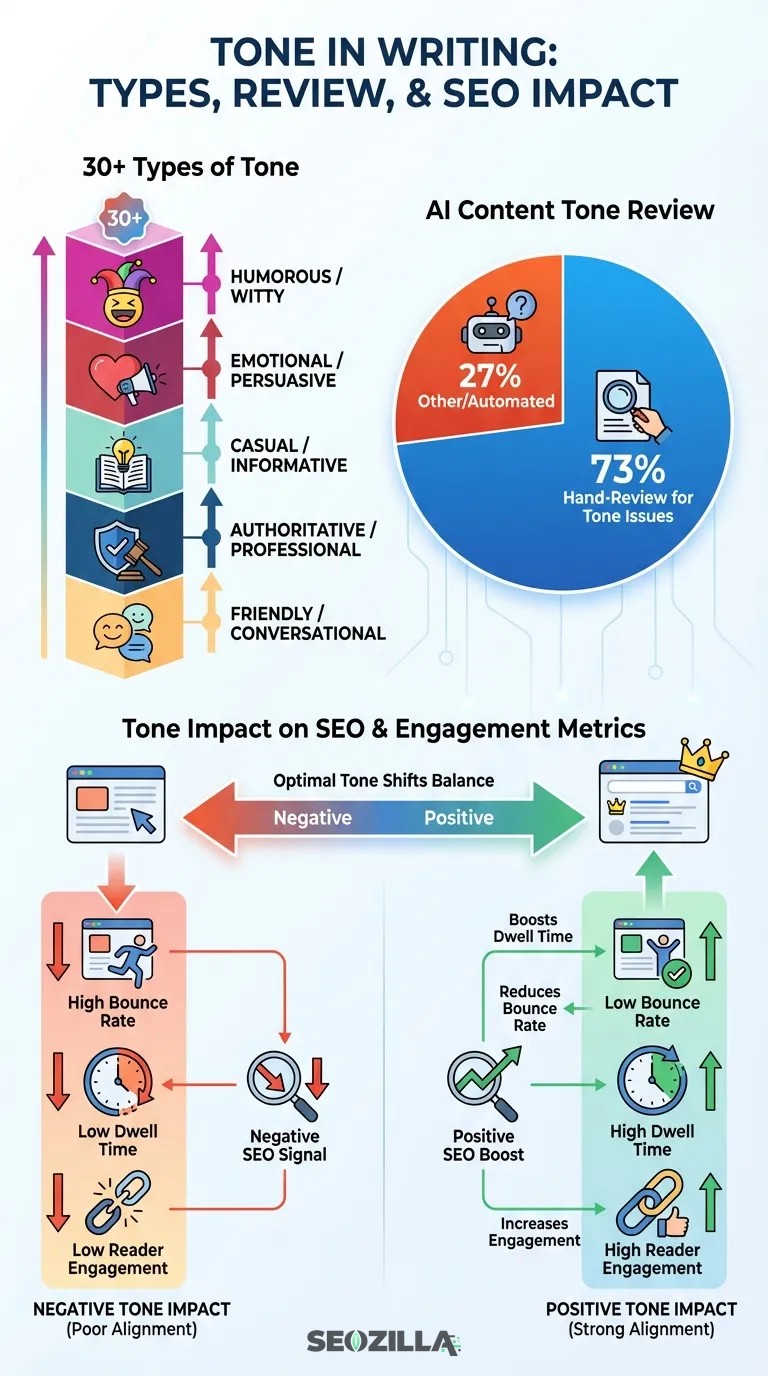
How to Choose the Right Types of Tone in Writing for Each Content Type
Different pages need different tones because people arrive with clear expectations, and usually not much patience, the attention economy is real. It’s important to know simple things like the fact that blog posts are known to work best with a friendly, conversational feel that keeps readers moving, using short paragraphs, simple words, and a bit of personality. Landing pages are different altogether, and usually need a confident, persuasive voice that helps people feel comfortable and clearly explains the value, like pricing, benefits, or what is meant to happen next. Support content, on the other hand, should of course feel calm and understanding, helpful, with clear steps and reassuring language helping users slow down and fix a problem (often when something has already gone wrong).
For SEO teams, tone works best when it matches search intent. Informational searches call for clear explanations and real examples. Commercial searches rely more on trust, like comparisons and proof. Navigational and help pages should stay direct and easy to follow, while local searches benefit from practical details such as hours, locations, or services.
One of the trickier parts is how tone gets written down. Short do-and-don’t lists and real page examples usually work better than long rulebooks. Instead of fixing tone later, it helps to set it early, review a few samples, adjust what feels off, and keep improving with real examples, because it’s rarely right on the first try.
Using AI Without Losing Tone
AI can speed up content creation, especially when you’re producing a lot at once, and that’s usually why people use it. The downside is tone drift, which can show up fast when models smooth out language and strip away personality (you’ve probably noticed this before). Optimizely insights show that strong teams avoid this by setting clear tone rules and keeping humans involved, usually an editor instead of a basic checklist.
This often means creating tone profiles for each page type. Clear brand examples help AI stay on track, but a careful read-through focused on how it feels still matters. Accuracy matters too, and so does how readers react.
SEOZilla supports this by mixing automation with clear brand and tone rules, like word choice, sentence length, and pacing. Teams can scale content while keeping voice, trust, readability, and consistent wording across pages. For more guidance, check out AI Writing Tools: Preserve Brand Voice at Scale.
Common Tone Mistakes to Avoid
Nothing breaks trust faster than hype on pages like pricing or security docs, and teams feel that right away. A common problem is mixing too many tones on one page, and it shows. When audience experience gets missed, teams either talk like experts to beginners or simplify so much that advanced users feel talked down to. The result is noisy and confusing.
Another common slip is copying a competitor’s tone without checking if it fits your brand (tempting, I know). What works somewhere else often feels wrong here.
A helpful approach is doing a tone review. You’ll notice spots where you pause or cringe. Ask yourself if the voice fits this moment. Most of the time, the answer becomes clear once you look.
Final Thoughts: Put Tone Into Practice
Tone isn’t just decoration here. It’s part of the strategy, and day to day it often decides if content feels human or easy to forget. When tone works, results usually get better, trust grows faster, and practical goals like conversions or clearer support copy are easier to reach. That’s likely why this topic keeps coming up, especially when trust really matters.
Key takeaways:
- Tone often shapes long‑term trust and everyday engagement, not fast wins
- Sales pages and FAQs usually need different tone choices to do their job
- SEO is affected by tone more than people expect, mainly through readability
- AI works better with clear tone rules and specific examples
A helpful way to start is to review content by page type, write down a few real examples, and pick tools that respect brand voice, like adjusting the tone on one FAQ answer and seeing support tickets go down. Additionally, platforms like SEOZilla.ai can significantly assist you in maintaining your brand’s tone or the tone you’ve learned from this article while writing blog posts.
Frequently Asked Questions (Info)
So, tone is basically the vibe behind the writing. It shows how a writer connects with the topic and the readers. This connection really shapes how the message gets across, affects how people react, and helps build trust. A good tone can stir up feelings that match what the writer wants, making a real bond with the reader. Plus, it can nudge them toward taking some action, often without being super pushy about it.
Tone is super important when it comes to keeping people engaged, making stuff readable, and building trust because these little signals help guide readers through content and can actually influence what they do next, like signing up for something or hitting that buy button.
Understanding how tone works with what readers expect can seriously change how effective your content is, remember it’s not just about writing nicely; it’s more about finding a tone that really connects with what your audience is feeling and what they need.
So, there’s really no fixed number with numbers varying from 20 to 50 and everything in between or more; it all depends on the context and who you’re talking to. This guide dives into over 30 different types of tone in writing that we think are important: covering stuff like marketing, SEO, narrative writing, and even blog content creation.
The right tone can build trust, bring clarity, and help create a stronger connection with readers and it can even nudge them toward taking action without them fully realizing it. The tone can totally make or break how effective your well-optimized content is. When the tone matches what the reader is looking for, like when someone’s just checking out tools compared to someone who’s ready to buy—it can really make a big difference.
Yeah, it’s usually doable when you have some clear guidelines, real-life examples, and a bit of human review to keep things on track, adding a bit of brand voice tweaking on top of it. Those clear guidelines act like a roadmap for everyone creating content, including your AI setup, making sure everyone gets what kind of voice and style we’re aiming for. Real examples? They’re super helpful because they show how the tone should actually sound, which makes it way easier for writers and the AIs to hit the right note.
And don’t forget about human review, it’s always a great extra bonus. Having a real human look over things will help you catch those little tone shifts that might otherwise slip through the cracks, helping the final piece really click with the audience and the AI to sound less like AI.
When you’re putting your content together, remember to think about how different tones might hit home with your audience’s feelings and what they expect, just thinking about this puts you a step ahead of the game. For example, it may seem simple, but a casual, friendly tone can totally pull readers in more when it’s a blog post, but then a more formal tone might fit better for something like a business report.
The tone you go for doesn’t just show what you mean; it also shapes how the reader sees your message and how they may act after. This back-and-forth is more important than we might think, especially for digital marketers, since it can really affect how much you grow and engage with your audience.