Local SEO Strategies for Small Businesses in 2025
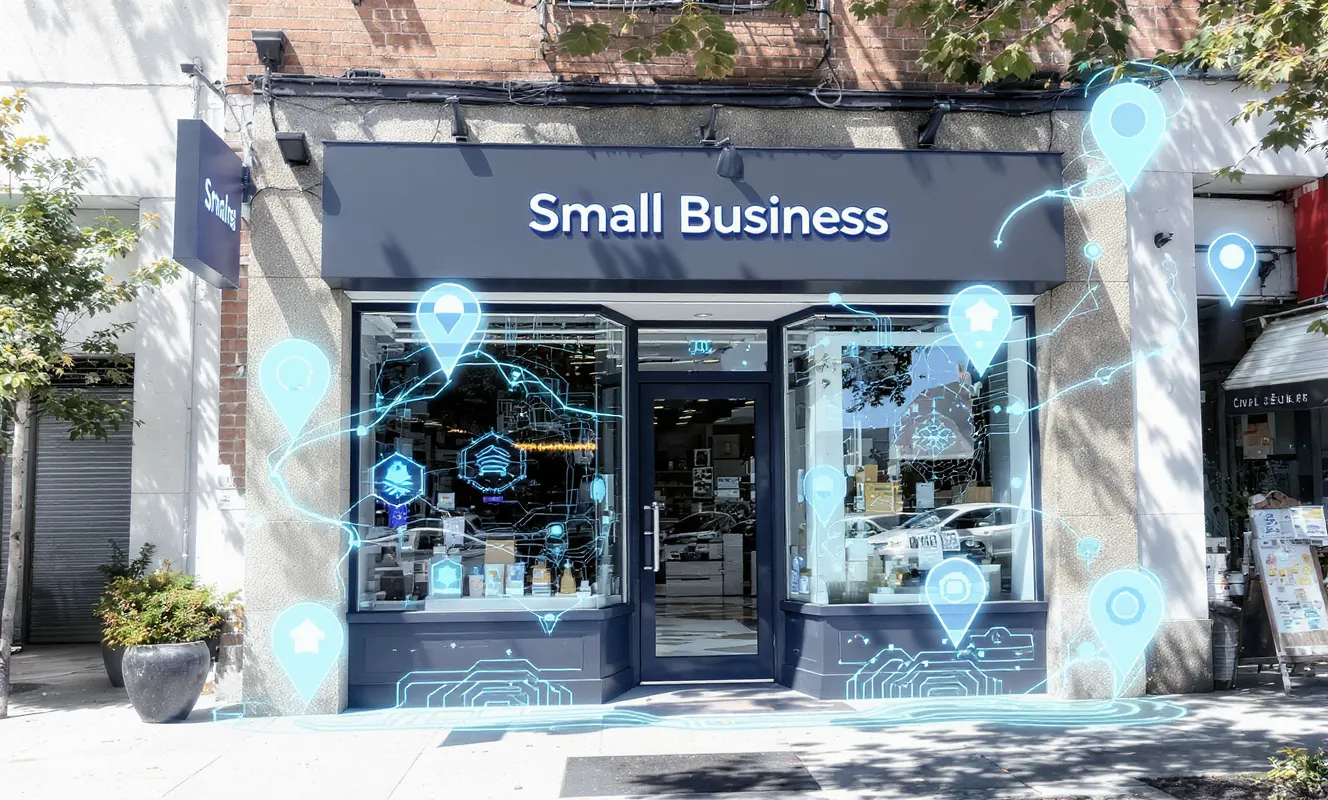
In 2025, local SEO strategies aren’t just a marketing tactic, therefore, they are the lifeline for small businesses that want to compete in a digital-first, hyper-local market. Moreover, the way customers search for and interact with businesses has evolved dramatically over the past few years, and the small businesses that adapt quickly will be the ones that thrive.
According to WiserReview, more than 50% of consumers use Google Search and Google Maps as their primary source for finding local business information (Source). Consequently, your visibility in these platforms directly impacts whether you get discovered or ignored.
In 2025, Google Business Profile optimization isn’t just a checkbox, it’s your primary local SEO lever. The completeness of your listing, review management, and geotargeted content directly impact whether you appear in the Local Pack.
This article will walk you through the most effective local SEO strategies for small businesses in 2025, with a strong focus on Google Business Profile optimization, hyperlocal content, voice search readiness, and AI-driven enhancements that can scale without losing your brand voice.
Claim and Optimize Your Google Business Profile (GBP) with Local SEO Strategies
Google Business Profile is your digital storefront on Google. Additionally, a complete, regularly updated profile signals trust and relevance to both customers and search algorithms. In 2025, Google has further refined its Local Pack ranking factors to prioritize businesses that demonstrate consistent engagement and accuracy in their GBP data. This means that even small discrepancies, such as a missing suite number or outdated business hours, can negatively affect your visibility.
Beyond the basics, you should take advantage of Google’s newer features like product listings, service menus, and booking integrations directly within your profile. For example, a local hair salon can enable appointment booking through Google without requiring customers to visit their website, reducing friction and increasing conversions. Furthermore, businesses should also leverage seasonal updates, adding holiday hours, special promotions, or event announcements, to signal active management.
Steps to Optimize Local SEO Strategies:
- Ensure NAP Consistency: Your Name, Address, and Phone number must be identical across all listings, directories, and your own website.
- Add Geotagged Images: Upload high-quality images tagged with your location metadata to improve visibility in Google Lens and Maps searches.
- Post Weekly Updates: Share promotions, events, and news to keep your profile active and relevant.
- Engage with Reviews: Respond to all reviews within 48 hours to show attentiveness.
- Utilize New GBP Features: Add service categories, FAQs, and product highlights directly within your profile.
| GBP Element | Impact on SEO | Optimization Priority |
|---|---|---|
| NAP Consistency | High | Critical |
| Geotagged Images | Medium | High |
| Weekly Posts | Medium | Medium |
| Review Responses | High | Critical |
Studies show that businesses with fully optimized GBP listings receive over 70% more clicks on their profiles compared to those with incomplete data. Moreover, verified listings generate an average of 105 monthly website visits (Source), and those that actively post updates see a 30% higher engagement rate.
Leverage Reviews as Ranking Signals in Local SEO Strategies
Reviews are not just social proof, they are a direct ranking factor for local SEO strategies. In 2025, Google’s algorithm places high value on review quantity, quality, and responsiveness, with sentiment analysis playing a bigger role in determining trustworthiness. Positive, detailed reviews that mention specific services, products, or locations can significantly boost your relevance for local search terms.
Encouraging customers to leave reviews should be a routine part of your operations. For example, this can include follow-up emails, QR codes on receipts, or verbal reminders after a successful transaction. Consequently, restaurants can include a small card with the bill encouraging diners to share their experience on Google. Additionally, responding to reviews, especially negative ones, demonstrates transparency and a commitment to customer satisfaction, which can turn a dissatisfied customer into a loyal one.
- Actively Request Reviews: Use post-purchase emails or QR codes at checkout to prompt customers.
- Respond Quickly: Aim to reply to all reviews within 48 hours.
- Address Negatives Professionally: Show commitment to customer service.
- Highlight Positive Reviews on Social Media: Amplify customer praise to reinforce trust.
Businesses with more than 50 reviews and an average rating above 4.2 stars tend to appear in the top 3 Local Pack positions significantly more often than those with fewer reviews. This is because Google interprets a high volume of positive feedback as a strong indicator of quality and relevance.
Small businesses should think of their Google Business Profile as a dynamic marketing channel. Update it weekly with posts, offers, and fresh images to signal activity to Google’s algorithm.
Target Hyperlocal Keywords with Local SEO Strategies
Generic keywords won’t cut it anymore. Hyperlocal keywords, those tied to specific neighborhoods, landmarks, or micro-locations, are what drive high-intent traffic. In 2025, search engines are better at interpreting proximity and context, meaning they reward businesses that tailor their content to very specific locales.
Example: Instead of ‘best vegan coffee in NYC’, target ‘best vegan coffee in Brooklyn Heights’. This type of keyword not only has less competition but also attracts users who are physically closer to your location, making them more likely to convert.
Steps:
- Use AI Keyword Tools: Platforms like SEOZilla can cluster local keywords by micro-location, factoring in trending events and seasonal demand.
- Create Dedicated Landing Pages: One page per service area improves relevance and ensures that Google understands your coverage.
- Embed Local Context: Mention nearby landmarks, community centers, or annual events to enhance local relevance.
- Incorporate User-Generated Content: Encourage customers to share photos or stories tied to your location.
Businesses that adopt hyperlocal targeting often see up to 50% higher conversion rates compared to those using broad city-level terms. As a result, hyperlocal searches typically indicate immediate purchase intent.
Voice Search Optimization in Local SEO Strategies
With 72% of consumers using voice search for local queries (Source), optimizing for conversational queries is essential. Voice searches are often longer and more specific, and they frequently include phrases like “near me” or “open now”.
To capitalize on this trend, structure your content to answer natural language questions. For example, instead of simply listing your business hours on a page, include a sentence like “We are open Monday through Saturday from 8 AM to 8 PM, right in the heart of downtown Springfield.” This makes it easier for voice assistants to parse and deliver relevant information.
- Integrate Natural Language: Answer common questions in a conversational tone.
- Include Location Data in Schema: Helps voice assistants understand your business location.
- FAQ Sections: Build out Q&A content that matches spoken queries.
- Optimize for Featured Snippets: Voice assistants often read out snippet content.
Furthermore, businesses that adapt their content for voice search often see increased traffic from mobile devices, as most voice queries occur on smartphones.
Structured Data & Local Schema for Local SEO Strategies
Implementing LocalBusiness schema helps Google understand your exact location, services, and hours. This boosts your chances of appearing in rich results and voice searches. In 2025, schema integration is more critical than ever, as Google uses structured data to populate knowledge panels and enhance Local Pack listings with additional details like service menus, product availability, and customer reviews.
Properly implemented schema can also help your business appear in specialized search features, such as “things to do nearby” or “services near me” panels. This is particularly valuable for businesses in competitive niches.
| Schema Type | Purpose | Example |
|---|---|---|
| LocalBusiness | Defines business location and details | Name, address, phone |
| Product | Details specific products | Product name, price |
| Review | Displays customer reviews | Rating, comments |
When combined with consistent NAP data, structured schema can reduce ambiguity for search engines and improve your chances of ranking in both local and organic search results.
Mobile & Visual Search Optimization
Mobile-first indexing means your site must load fast and look great on mobile devices. Visual search tools like Google Lens require high-quality, keyword-tagged images that accurately represent your products or services. In 2025, Google Lens usage has surged, particularly among younger demographics who prefer to search by snapping a photo rather than typing a query.
- Compress Images: Maintain quality but improve load speed.
- Use Alt Text with Local Keywords: Describe the image with location-specific details.
- Test Mobile UX: Ensure tap targets and navigation are intuitive.
- Leverage WebP Format: For faster load times without sacrificing quality.
Retailers can benefit greatly from visual search optimization. For example, a boutique clothing store that tags product images with “handmade scarf downtown Austin” can appear in visual search results for users photographing similar scarves.
Hyperlocal Content Marketing in Local SEO Strategies
Publishing content tied to local events, news, and community topics builds relevance and authority. In 2025, Google rewards businesses that demonstrate genuine community involvement and produce content that serves local audiences.
- Neighborhood Guides: Create blog posts highlighting local attractions, dining options, and hidden gems.
- Event Coverage: Share recaps or previews of local events, fairs, or festivals.
- Local Partnerships: Feature collaborations with nearby businesses, charities, or schools.
- Highlight Customer Stories: Showcase testimonials or case studies from local clients.
Additionally, by weaving local culture and stories into your content, you signal to both search engines and potential customers that your business is deeply embedded in the community.
AI-Driven Local SEO Strategies Enhancements
AI tools can automate keyword research, content generation, and even review responses. Platforms like SEOZilla AI tools allow small businesses to scale content creation while maintaining brand voice. In 2025, AI-driven optimization can analyze local trends in real-time, enabling businesses to publish relevant content faster than competitors.
Advantages:
- Keyword Clustering by Location: AI groups related keywords by specific neighborhoods or districts.
- Automated Internal Linking: Ensures your local landing pages are interconnected for better SEO.
- Consistent Brand Tone Across Pages: Maintains your voice even at scale.
- Predictive Content Suggestions: AI can forecast which local topics will trend in the coming weeks.
Consequently, businesses that integrate AI tools often see higher efficiency, reduced content production costs, and improved ranking stability.
Troubleshooting Local SEO Strategies Issues
Common challenges include inconsistent citations, outdated GBP info, and slow site speed. In 2025, these issues are magnified due to Google’s increased emphasis on real-time data accuracy.
Quick Fixes:
- Audit citations with tools like BrightLocal to find and correct discrepancies.
- Schedule monthly GBP updates to ensure hours, services, and photos remain current.
- Optimize hosting for faster load times, particularly on mobile.
- Monitor local rankings weekly to identify sudden drops and investigate causes.
Ultimately, proactive troubleshooting prevents small errors from snowballing into significant ranking losses.
Summary Insights on Local SEO Strategies
Local SEO strategies in 2025 blend traditional practices with cutting-edge technology. The businesses that combine GBP optimization, hyperlocal content, and AI-driven enhancements will see sustainable growth. Additionally, investing in consistent review management, structured data, and mobile optimization ensures long-term competitiveness.
Local SEO success now hinges on blending traditional optimization, citations, NAP consistency, with newer strategies like leveraging AI tools for keyword clustering and automated review responses.
Conclusion: Maximizing Local SEO Strategies for 2025
In 2025, small businesses have a powerful set of tools at their disposal to compete locally. By prioritizing Google Business Profile optimization, leveraging reviews, targeting hyperlocal keywords, and embracing AI, they can achieve scalable growth without losing their authentic brand voice.
Key Takeaways:
- GBP Optimization is Non-Negotiable
- Reviews Drive Rankings and Trust
- Hyperlocal Keywords Convert Better
- Voice Search is Growing Rapidly
- AI Tools Enable Scalable, Consistent SEO
For SaaS, e-commerce, and mid-sized online businesses, these local SEO strategies offer a blueprint for dominating local search while maintaining technical SEO excellence and brand integrity. The future of local search belongs to businesses that combine human connection with technological precision, ensuring they remain visible and relevant in an increasingly competitive digital landscape.