Google Page Ranking Factors: How Rankings Are Determined
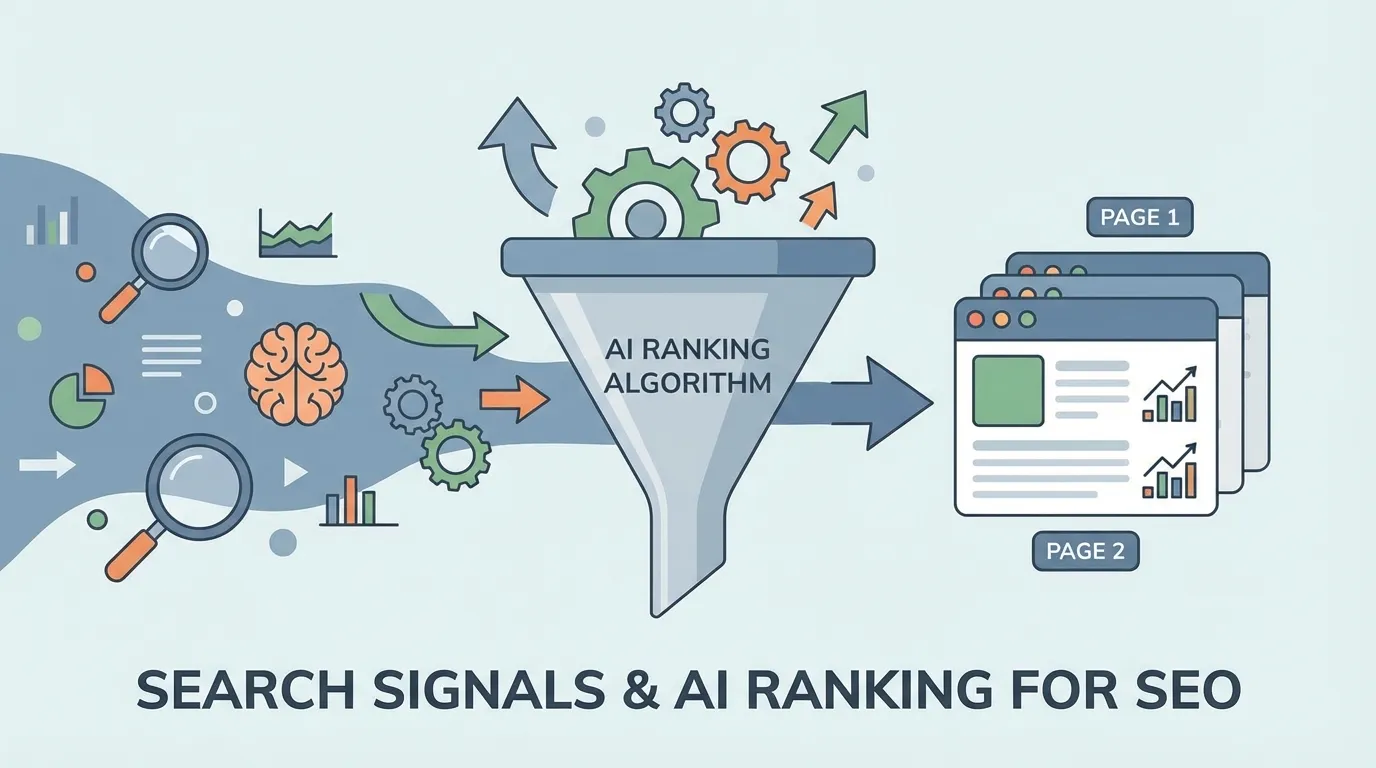
Google’s ability to rank billions of web pages in a fraction of a second sits at the center of modern digital marketing (and yes, it still feels a bit wild). For digital marketers, SEO specialists, content managers, and growth teams in SaaS, e‑commerce, and many mid‑sized online businesses, understanding google page ranking factors is usually a practical need, not a nice‑to‑have. Rankings directly affect visibility. Visibility brings traffic, and over time, that traffic often supports revenue. It’s rarely instant, but it adds up, which is why teams play the long game. Google’s ranking system isn’t a single algorithm or a neat checklist. It works more like an evolving system, built on many signals and machine‑learning quality frameworks, all focused on showing users results they trust and actually want to see. Shortcuts don’t fit well into that setup.
This article explains how Google determines rankings, with a practical focus on scalable, AI‑driven SEO content strategies that protect brand voice and technical quality, things teams balance every day. It avoids trend‑chasing, which matters in real workflows. Myths and outdated tactics are skipped so the focus stays on what matters now, and how growth teams can use it in daily SEO work, like improving a key product page or fixing content quality issues that quietly drag rankings down.
Understanding Google’s Ranking Philosophy
What stands out is how focused Google really is. Its ranking philosophy usually comes down to one main idea: giving users the best answer to what they’re searching for. Algorithms, signals, updates, and AI systems are all built to support that goal, it’s narrow on purpose. Google ranks pages to help people find the information or page they asked for. Helping marketers isn’t the goal, even if good marketing often benefits as a side effect.
For businesses, this changes where the effort goes. Long-term SEO success often comes from matching content, technical setup, and the overall site experience with real user intent. Quick wins can happen, but rankings that stick are usually built through trust, relevance, and showing up consistently over time. That takes patience, and there really aren’t shortcuts.
Google looks at pages across two broad areas:
- Relevance: How closely the page fits what the user is actually trying to find, not just the keywords.
- Quality and usability: How helpful and trustworthy the content feels, and how easy the page is to use, often on different devices.
Behind the scenes, hundreds of signals feed into these areas, with machine learning systems adjusting as search behavior keeps changing.
Crawling, Indexing, and Ranking: The Foundation of Google Page Ranking Factors
Usually, a page can rank only after Google finds it and understands it. Crawling and indexing happen first, and ranking comes after that in most cases.
Crawling: Discovering Content
Google uses automated crawlers to find new pages and spot updates. They follow links, pull from sitemaps, and usually check known URLs over and over. On growing SaaS and e‑commerce sites with thousands of pages, crawl efficiency often matters more than it seems. Weak internal linking and duplicate parameter URLs can waste crawl budget and slow indexing for you.
Indexing: Understanding Content
The main idea is what happens after a page is crawled: Google then tries to index it. Indexing means Google reads the page’s content and code, plus structured data and context, to figure out what the page is about, basically what it says. It checks text, images, headings, metadata, and layout. Pages that are thin or duplicated often get crawled but not indexed, and that difference matters because it affects whether the page appears in search results.
Ranking: Ordering Results
Results can change based on location, device, language, and intent, so what you see may differ with each search. Ranking starts the second you search: Google’s systems scan indexed pages and sort them by relevance and quality in real time, quickly. Try the same query on mobile and desktop to see the difference.
Relevance Signals: Matching Search Intent in Google Page Ranking Factors
Relevance usually means matching what someone wants right then, pretty simple. Google often reads intent in a smarter way, looking beyond basic keywords, so it doesn’t depend on them alone.
Keyword Context Matters
Google rankings usually don’t reward keyword stuffing. Google looks at meaning and how ideas connect, not tricks. To me, that means:
- Covering the main topic with real depth
- Using related concepts and entities that support the core idea
- Writing in natural language that sounds right to people
- Placing terms on the page with search intent in mind
For content managers, strong coverage beats exact matches and works better.
Search Intent Types
Pages often struggle to rank when the intent doesn’t line up, even with solid writing. It’s frustrating, and it happens a lot. That’s why Google groups intent into four main types:
- Informational: answers or explanations
- Navigational: a specific brand, site, or page
- Commercial: comparing options before buying
- Transactional: purchasing or finishing a conversion
When these don’t match, results feel off. For example, a long educational article rarely fits a transactional search, where pricing or feature pages are what people expect.
Content Quality and E-E-A-T in Google Page Ranking Factors
So content quality matters for Google rankings, I think, using E-E-A-T (yeah, that framework): Experience, Expertise, Authoritativeness, and Trustworthiness, and for you, this often matters, especially when the goal is visibility.
Experience and Expertise
What really shows is content shaped by real use, not just theory. Google tends to favor work made by people with hands‑on experience or proven skill. For SaaS and e‑commerce brands, this often appears quickly and feels earned over time.
- Practical examples pulled from real use cases
- Clear, step‑by‑step explanations that make topics easier to follow
- Industry‑specific insights, often learned the hard way
- Clear signs of hands‑on knowledge
AI‑generated content can still work when subject‑matter experts guide and refine it, I think. Without that steady input, it often feels close, but not quite there.
Authoritativeness
Authority is mostly about reputation, in my view, and it usually builds over time. Google often looks at how a site and its content show up within their topical ecosystem, the kind of neighborhood they work in. Signals still matter: brand mentions, along with a steady, clear topical focus that isn’t flashy.
A mid-sized business doesn’t need to be a global brand to build authority. With consistent, high-quality, focused content, it can often earn trust inside a niche. Simple, and it usually works.
Trustworthiness
And trust really matters, especially when money and health choices are involved (you can feel it). Clear info, open branding, easy-to-find policies, and solid security help, but there’s more to it (yeah). For example, Google Search Central offers guidelines that reinforce trust factors.
Technical SEO Signals That Influence Google Page Ranking Factors
And technical SEO sets the base, it’s the plumbing, to me. Basics still count. Even good writing can fail, and content often struggles when those technical pieces aren’t ready.
Page Speed and Performance
Slow pages raise bounce rates, lower engagement, and hurt performance, especially on phones. Google uses page speed as a ranking signal, mostly on mobile. Simple fixes help: clean code, fewer scripts, optimized images, faster servers, and smart caching, for you.
Since rankings often come from the mobile version Google indexes, responsive layouts, readable text, and easy navigation matter on small screens, so it’s more than just a nice-to-have.
Core Web Vitals
Core Web Vitals show real user experience using metrics like load speed and visual stability (things you can see). They aren’t strong ranking factors alone, but on competitive searches, they can tip the scales when overall quality is similar (you).
On-Page SEO Elements and Their Role in Google Page Ranking Factors
On-page SEO helps Google understand content. These elements send structured signals that guide how content is read in most cases, simple cues that tend to work.
Meta descriptions don’t directly change rankings, but they often affect click-through rates, which can shape performance over time. Title tags are still a strong on-page signal and work best when they clearly describe the page topic and match what people search for, including the exact query.
Headings and Content Structure
Google can quickly understand sections when pages use a clear heading hierarchy, which helps featured snippets and related search features. It also usually makes pages easier to read.
Internal Linking
Internal links share authority across a site and help Google see how pages connect, which you can notice. On large SaaS and e‑commerce sites with deep content libraries, internal linking matters more, so it helps. For example, SaaS SEO tools can be pivotal for improving site-wide link structure.
Off-Page Signals: Authority Outside Your Site
I think content and technical quality usually matter, for sure.
It’s pretty simple: Google also looks at signals outside your site.
Backlinks as Trust Signals
Backlinks often work like endorsements. When links are high-quality and relevant, they show other sites that the content has real value (that seems true here). Quality usually matters more than volume. Unnatural or manipulative tactics can hurt rankings, so ethical link building helps steady, long-term growth.
Brand Mentions and Online Presence
These are simple signals, usually basic. Google often uses brand mentions and citations as signals of authority, so being present across digital channels helps build trust and relevance in most cases.
User Engagement and Behavioral Signals in Google Page Ranking Factors
What often catches attention is how real people respond. Google doesn’t openly confirm every behavior signal, which is pretty normal, but user engagement still seems to factor into how content gets judged, likely more than they say. These reactions show up in small, everyday ways: how people react to what they see and how they move through a page, like scrolling, clicking, or leaving.
Signals may include:
- Click-through rate from search results
- How long people stay on a page, even if it’s short
- Interaction depth, such as scrolling or taps
- Return visits over time, not just one visit
AI and Machine Learning in Google Ranking
Google uses machine learning a lot to understand searches and rank results (at scale). I see it as spotting patterns and tweaking how different signals are weighted (which you notice).
Query Understanding
AI often helps Google make sense of vague, chatty searches, even messy ones, and that’s usually key. Pages can still rank without exact keyword matches when content matches what you want, so intent often matters.
Content Evaluation at Scale
Machine learning helps Google spot quality patterns across large amounts of content, often separating templated or low‑value AI from well‑edited, brand‑aligned AI that tends to perform better. Still, it’s brief and not perfect, I think, you can usually see the gaps.
Personalization and Context
Location, device, language, and search history can shape rankings. Personalization is usually limited, so context still drives visibility, especially for specific locations or devices.
Comparing Key Google Page Ranking Factors Categories
What often grabs attention here is how uneven the impact really is. Not every ranking factor moves the needle in the same way, and this snapshot shows that quickly. The table below is kept practical and short, because long explanations rarely help with day‑to‑day SEO work. It points to where effort usually pays off most and what each category is actually trying to improve, whether that’s matching intent or making pages faster. In real work, some factors affect rankings more directly than others, which is usually what people care about most. No fluff, just the essentials (which is honestly nice).
| Ranking Factor Category | Primary Purpose | Relative Impact | Key Optimization Focus |
|---|---|---|---|
| Content Relevance | Match search intent | Very High | Topic depth and intent alignment |
| Content Quality (E-E-A-T) | Build trust and authority | Very High | Expertise and accuracy, explained clearly |
| Technical SEO | Enable crawling and usability | High | Speed and mobile performance, plus solid indexability |
| Backlinks & Authority | Validate credibility | High | Earning high-quality links |
| User Experience | Measure satisfaction | Medium | Engagement and overall usability |
| Behavioral Signals | Refine result quality | Medium | Click-through rate and dwell time |
The real value usually shows up when these pieces work together. Content relevance and quality often move rankings faster, while technical SEO and links help keep things steady over time. That balance often leads to better decisions, like fixing intent gaps before spending time on tiny speed tweaks.
Scaling SEO Content Without Sacrificing Quality
For growth teams, scale is often the challenge. A few strong pages usually aren’t enough once markets get crowded and competition pushes harder, you’ve seen it. As content grows, it should protect the brand voice, with technical SEO basics done right.
AI-Driven Content Production
But AI often speeds research and drafting when teams set clear standards (I think that’s key). It works like a co‑pilot, while humans usually lead strategy (you’ll notice). Guardrails help too, so people stay in charge.
Editorial Oversight and Brand Voice
Brand voice builds trust and recognition when people see it over time. Content managers lean on style guides and review steps tied to quality benchmarks, so AI-assisted content fits brand values (you notice). For tool comparisons that align with brand voice, see Surfer SEO vs Ahrefs.
Programmatic SEO with Purpose
Programmatic SEO can help SaaS and e‑commerce grow, I think, when each page gives real value (not filler).
Thin copy‑paste templates often get filtered by Google’s quality systems, so you usually can’t take shortcuts (sadly).
Common Misconceptions About Google Ranking
Old SEO ideas still shape a lot of choices, and they often slow teams down more than expected. These beliefs hang on longer than they should, even though search works differently today. Clearing them up usually makes strategies feel simpler and easier to use, and it often saves time and stress along the way.
- Google doesn’t rank pages by keyword density alone; repeating phrases rarely helps.
- Longer content may sound better, but short and useful often wins.
- AI content isn’t penalized by itself; issues appear when quality drops.
- Ranking factors change, and context often decides what matters most.
Measuring and Adapting to Ranking Performance in Google Page Ranking Factors
Ranking is rarely a one-time win. It usually needs regular tracking and small rounds of updates (short cycles help, I think). Data lets teams adjust pages and deal with algorithm changes without stress, especially after core updates (you’ve seen those). This is useful during monthly reviews.
Key performance indicators include:
- Keyword visibility by page (home vs. blog)
- Organic traffic quality (bounce rate, time on page)
- Organic conversion rates (signups or sales)
- Indexation and crawl health for key URLs
Common Questions We Cover (, )
Big core updates roll out a few times each year and can move rankings around. Google also makes smaller system changes, and most go unannounced. With all these shifts, I think it’s better to stop chasing updates and focus on content users find clear, accurate, and easy to read.
Quality often decides the outcome. AI-generated content can rank when it’s helpful, accurate, and fits what people are searching for (I think). When originality, depth, or editorial review are missing, it often struggles (you’ll see it).
Yeah, backlinks still matter. They usually show trust and authority when the links fit the topic, not random stuff. I often see relevance and quality beat volume, so a few strong links usually win.
The timeline varies. In real use, technical fixes can show results in a few weeks, bringing faster wins. Content work tied to authority usually takes months and moves more slowly, so patience is often needed.
There isn’t one single top factor. Strong results tend to come when relevant, high‑quality content works well together, with technical SEO also counting, and a good user experience often helping.
Final Thoughts
Knowing how Google ranks pages helps digital teams stop guessing and make clearer choices, which can feel like a relief. Over time, Google’s systems usually reward pages that truly help users. Relevance, quality, simple usability, and real usefulness matter more than tricks. For SaaS, e‑commerce, mid-sized online companies, and growing digital brands, scalable SEO often comes from strong technical basics, trusted content, smart AI use, and regular site care.
Algorithm updates come and go, but worrying about every change rarely helps. Teams that focus on real value, content that answers questions, shows expertise, and gives a good experience, are the ones Google’s ranking systems tend to notice, like clear and helpful product FAQs.