Best SEO Tool for WordPress in 2026

Choosing the right SEO tool for WordPress in 2026 often feels harder than it should. Plugins are everywhere, AI claims are louder than ever, and there are more dashboards to learn than most teams ever asked for. Every tool says it’s the best. Still, the same issues keep coming back. Content usually takes too long to create. Technical SEO can feel risky, where one wrong setting quietly causes problems. Brand voice often drifts as more people work on the site. And once you manage more than one site, scaling can get messy fast, often sooner than expected.
How WordPress SEO Changed Going Into 2026
WordPress still dominates and powers a large share of the web, but SEO inside WordPress looks very different now. A few years ago, most plugins focused on keywords and basic metadata, and that was often enough. Those were simpler days. That approach doesn’t work well anymore. Search engines now look more closely at intent, site structure, performance, and how fully a page covers a topic, it’s all much more intricate. Content that only chases keywords, without actually helping readers, often slips in rankings quickly. And in most cases, that drop doesn’t correct itself.
Expectations rose even faster with AI search features and zero‑click results. Pages are now expected to answer real questions clearly and early, often near the top instead of burying answers further down the page, which you’ve probably noticed when searching. Fluff usually gets skipped.
Around 35% of WordPress sites use an SEO plugin (nice!), and about 72% of users report ranking improvements after installing one. Those numbers are solid. At the same time, surveys often show that sites mixing plugins with a real content strategy perform much much better. Tools and checklists help, but results still depend on how steady and thoughtful the work is.
| Metric | Value | Year |
|---|---|---|
| WordPress sites using an SEO plugin | 35% | 2026 |
| Users seeing SEO improvement | 72% | 2026 |
| SEO plugin users with Google Analytics | 60% | 2026 |
Performance is now at the center of SEO conversations. Core Web Vitals carry more ranking weight, especially on mobile, where most traffic comes from. Heavy plugins can slow pages and raise bounce rates, which rarely helps. Because of this, many WordPress teams choose lightweight tools and avoid stacking similar plugins when long‑term growth is the goal.
What Actually Makes the Best SEO Tool for WordPress
Before comparing tools, it helps to stop and think about what “best” really means in 2026. For most growth teams, it’s usually not about cramming in every possible feature. It’s more about focus. The tools that work best tend to do the things that actually move results forward, like giving clear content direction and keeping the technical setup simple, while cutting out friction. Extra dashboards and endless settings often slow teams down instead of helping. Less clutter usually leads to progress you can actually see from week to week.
What often matters most is content optimization that fits real search intent. Instead of nudging writers toward keyword-heavy posts that feel shallow, strong tools guide them toward useful, complete pages. You’ll often see this through clear structure suggestions, wider topic coverage, related terms, and practical internal linking ideas, the kind you can use right away. This only works when it’s based on how people actually search, not just keyword volume pulled from a chart.
Technical SEO should feel just as easy to deal with. Canonical tags, schema, sitemaps, robots rules, and redirects should work out of the box. When non-developers can make changes with confidence, teams move faster and stress less about breaking something or causing indexing problems.
Performance is another area where small details add up. Lightweight plugins matter because even page speed changes as small as 0.1 seconds can affect conversions and rankings, especially for e-commerce and lead-gen pages.
AI features also need a careful approach. Many teams tried AI and pulled back when the results felt generic or off-brand. The strongest WordPress SEO tools now focus on brand-matched writing, clear editing controls, and review workflows, so trust stays intact when content goes live.
Research from WP Rocket shows that plugin size and code bloat have a real impact on WordPress site speed, particularly for content-heavy businesses (Source).
Rank Math: Feature-Rich and Performance-Focused
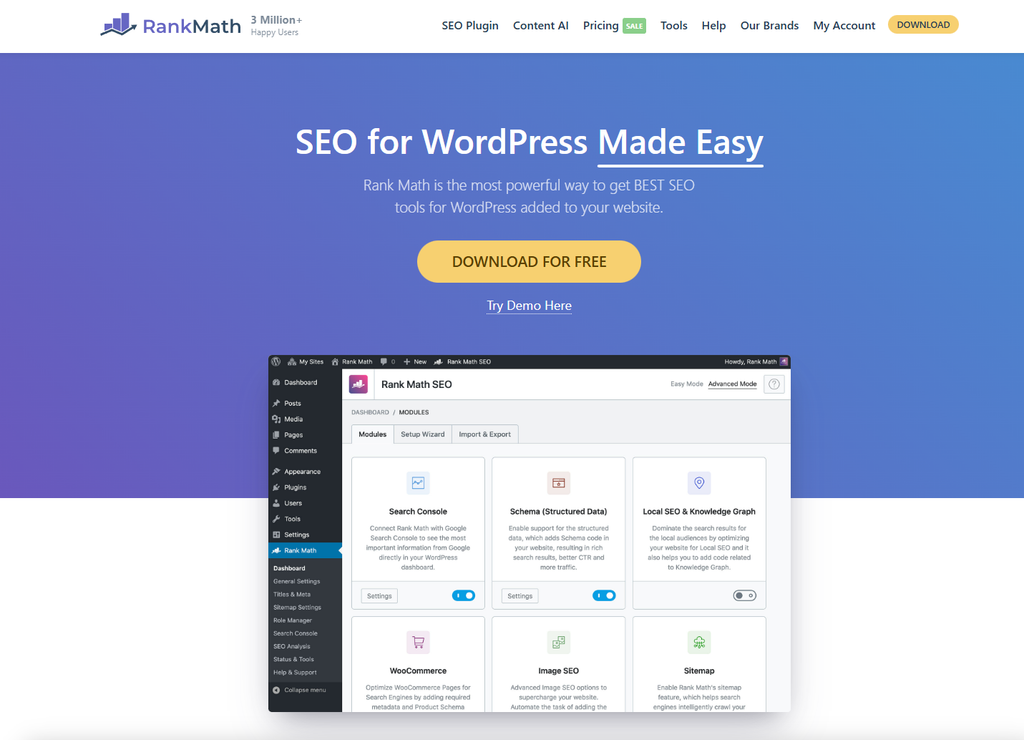
Rank Math often comes up early when people talk about leading WordPress SEO plugins, and that reputation usually grows over time for a clear reason. The plugin brings together many advanced tools while keeping the setup fairly lightweight, which matters to teams that care about site speed. If heavy dashboards are a worry, this balance can feel like a relief, especially when page load times are being watched closely.
One thing that’s easy to appreciate is how much Rank Math keeps in one place. Schema markup, XML sitemaps, redirection tools, image SEO, and content analysis all sit under the same system. For growing websites, this often means fewer extra plugins to manage and fewer updates to deal with. As a site grows, that kind of consistency helps keep SEO work steady from one page to the next.
| Feature | Rank Math | Yoast SEO |
|---|---|---|
| Plugin size | 2.85 MB | 7.18 MB |
| Page speed impact | +0.01s | +0.18s |
| Free focus keywords | 5 | 1 |
Rank Math also offers AI-assisted ideas for titles and meta descriptions. Many teams still use separate AI writing tools, but the built-in suggestions handle most day-to-day needs. The plugin tends to work best for technical SEO and structured data, especially for users who are comfortable exploring detailed settings.
Overall, Rank Math works well for businesses that want more control without giving up performance. It leaves room to fine-tune things without enterprise-level costs or stacking multiple overlapping plugins, which often puts it in a practical middle ground.
Yoast SEO: Editorial Guidance and Trust
Yoast SEO is still one of the most widely used SEO tools for WordPress. Yoast has more than 10 million active installs, its reputation comes from steady, reliable use over many years rather than quick wins, which editors are usually wary of. Many content teams continue to use Yoast for readability checks and keyword guidance, all inside workflows that feel familiar and easy to follow. Anyone who has worked with WordPress before will usually recognize the interface right away.
It works especially well in editorial settings as the traffic light system gives clear, practical signals for common SEO tasks, so even if the writers do not have much SEO knowledge or a technical background, which is often the case. Because the cues are simple, training usually takes less time, and baseline quality stays more consistent across large teams with many contributors.
The downside is that Yoast is heavier than many newer plugins and some advanced features, like full schema support for products or video, are locked behind paid add-ons, and as you know, those costs can add up. Over time, this can create extra complexity for large sites managing layered content.
Yoast is stable and well documented, with support from a large, active community. BuiltWith reports usage on over 22 million sites worldwide (Source). From my perspective, this level of adoption gives teams confidence in long-term maintenance, regular updates, and ongoing compatibility as WordPress keeps changing. Even better, tools like the next one can integrate it’s open source release to power them and reach the next level.
SEOZilla.ai: AI-Driven SEO Content at Scale
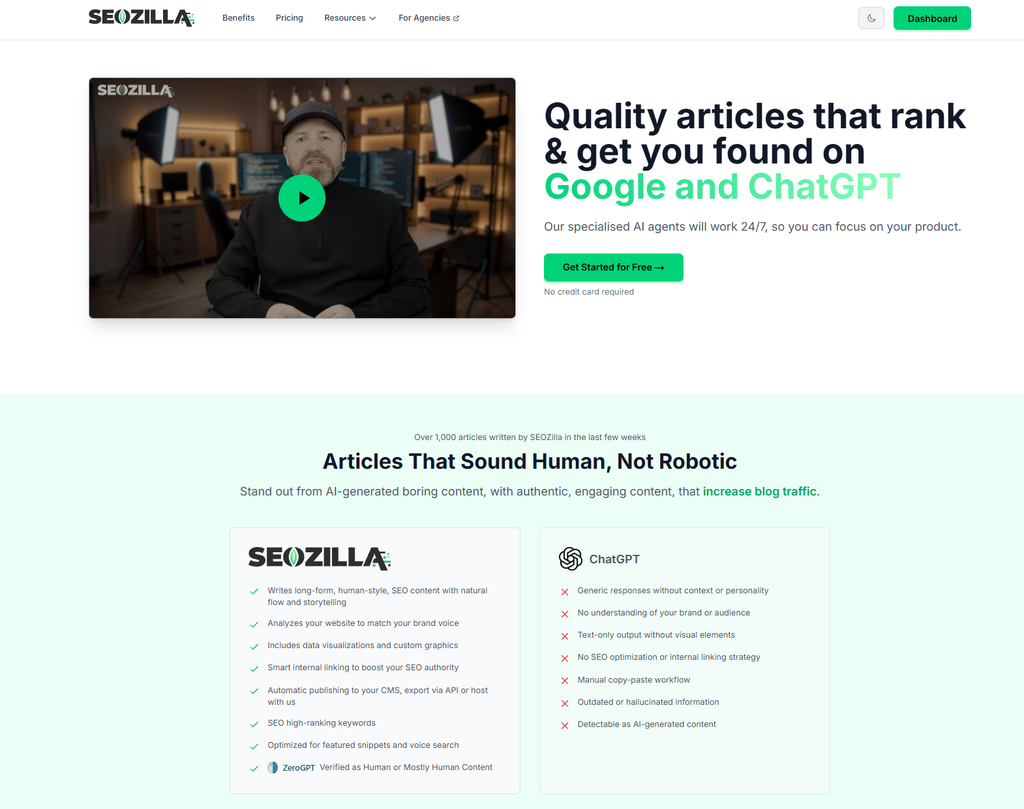
SEOZilla.ai isn’t a typical WordPress plugin, not even close. Even so, it usually fits well into modern WordPress SEO setups, especially for teams trying to create, optimize, and manage large amounts of content without losing brand voice or technical quality. That balance often slips as publishing speeds up, sometimes faster than teams expect.
At its core, SEOZilla.ai helps teams plan content calendars and create articles that match brand guidelines, while internal links are guided by topic connections. The idea is fairly straightforward, yet it often works well. Since the platform connects with WordPress and other CMS tools, it tends to support multi-site publishing and distributed teams, including remote groups where staying aligned can be difficult.
Where the platform really stands out is consistency. As websites grow, internal linking usually turns manual and disorganized over time. SEOZilla.ai handles that process and keeps links relevant and natural across pages, which often means less fixing later. In practice, this usually helps search engines move through content more easily and gives visitors clearer paths as they read.
There’s also a strong focus on AI content detection and quality checks. Search engines are getting better at finding low-value pages, so this matters for teams publishing often. When AI output follows brand tone and editorial rules, teams can move faster without constant edits or added risk.
For SaaS and e-commerce brands creating hundreds of pages each year, SEOZilla.ai usually works alongside tools like Rank Math or Yoast. It doesn’t replace them. Instead, it focuses on content planning and execution, rather than page-level SEO changes handled one URL at a time.
All in One SEO (AIOSEO): Simplicity for Growing Teams
All in One SEO, usually called AIOSEO, is built for teams that want reliable SEO tools without extra complexity. On most days, the clean, guided interface makes routine tasks feel easier, especially when time is limited. Titles, meta descriptions, and main on-page settings are simple to find, and there isn’t much visual clutter. You end up spending more time improving pages and less time digging through menus.
Compared to Rank Math, AIOSEO feels heavier. That extra weight comes from its focus on consistency and ease of use, which often works well for mid-sized businesses that want steady results instead of constant tuning. Less adjusting and more stability, overall.
AIOSEO keeps adding AI-related features, though most teams still use separate AI tools. As part of a larger SEO setup, it works well with common WordPress plugins for audits, content updates, and technical cleanup. It’s a solid fit, in my view.
SEOPress: Clean, Developer-Friendly Control
SEOPress attracts users who want real control without extra noise. It skips ads and upsell prompts in the dashboard, which many teams find refreshing during daily work. The calmer interface makes it easier to stay focused. The plugin supports schema, redirects, breadcrumbs, and advanced metadata, while staying flexible for custom themes and headless WordPress setups.
Compared to Yoast, SEOPress gives writers less hands-on guidance by design. Teams with strong editorial workflows or AI platforms like SEOZilla.ai are usually fine without prompts. For technically confident teams, it’s a strong SEO tool for WordPress.
Best SEO Practices for WordPress Using These Tools
Tools are useful, but they don’t do much on their own without steady habits, in my view. In 2026, WordPress SEO usually works best when tools support a clear, repeatable routine for content and technical health, with links added naturally instead of forced. Shortcuts can sound appealing, but you usually notice fast when they don’t last.
One of the biggest gains often comes from site structure. A clean layout, sensible categories, and avoiding deep nesting can make a clear difference. Many sites run into trouble by creating too many categories, so keeping key pages within two or three clicks of the homepage often helps both crawlers and visitors stay oriented.
Internal linking is another area where effort pays off over time. New posts should link to related articles, and older content can link back when it truly fits. Tools can suggest links and save time, but the real benefit shows up as topical authority grows. For example, comparing plugin performance using resources like Surfer SEO vs Ahrefs can inform better tool selection.
What about content itself? Quality still matters, often more than clever tricks. Writing for real users, answering common questions clearly, and keeping things simple usually works well with how modern, AI-driven search measures usefulness.
Finally, performance needs regular attention. Rankings, traffic, and technical warnings are worth checking because they rarely fix themselves. Even with automation in place, SEO is usually steady, ongoing work, more like catching a small issue early than reacting to a big problem later.
Common SEO Tool Mistakes to Avoid
Using several SEO plugins can seem like a smart shortcut, but it often creates more problems than it fixes. When tools overlap, site speed can drop and conflicts can show up fast. Duplicate metadata is a common result, and it often appears later in reports, which adds confusion. In my view, it’s usually better to pick one solid SEO plugin and build your setup around it. That approach means less juggling and fewer surprise issues.
Another mistake teams make is relying too much on AI output without a real review. AI helps speed up research and early drafts, but facts and tone still need a human eye. It works best as support for experienced judgment, not a stand-in.
Technical warnings also get ignored more than they should. Small problems like broken links, index issues, redirect chains, and slow pages can pile up quietly. Most tools flag these early, but teams often wait to act until rankings begin to drop.
For deeper comparisons, you can also explore SaaS SEO tools that integrate well with these plugins.
Questions people often ask
There’s rarely one “best” plugin, since teams have different needs, and that’s fine. Rank Math is known for speed and features, Yoast works well for editorial teams, AIOSEO keeps setup simple, and SEOZilla.ai helps manage AI‑driven content at scale. Many consider these among the top SEO plugins for WordPress in 2026.
Yes, but it’s usually better not to run multiple SEO plugins at the same time, even if it sounds helpful. A common setup is one SEO plugin, plus a platform like SEOZilla.ai, which is often enough for content planning and internal linking.
AI tools are usually safe if you use them responsibly (I think). Quality and real user value still matter, you do. A clear focus helps, and platforms that support brand-matched writing with human review can lower risk.
Some do, in my experience. Plugin size and database use matter most, and sloppy code adds load. Lighter options like Rank Math or SEOPress usually hit performance less, especially on mobile, so phones tend to feel faster.
Tools help with execution, but strategy usually leads. Clear goals, solid content, technical discipline, and habits you keep are what bring steady SEO results, so consistency matters most, in my view.
The Bottom Line: Choosing What Fits Your Growth
The best SEO tool for WordPress in 2026 usually comes down to how a site plans to grow and how involved the team wants to be day to day. When speed and control matter most, Rank Math or SEOPress are often a good fit. They let teams fine‑tune on‑page settings, schema, and technical details without much hassle, which helps when small changes start to stack up. If clearer direction and fewer options feel better, Yoast and AIOSEO are solid, simpler choices. They work especially well for solo site owners who prefer guidance instead of lots of settings.
For teams growing content across multiple sites, SEOZilla.ai fills a different need. It helps with planning, writing, internal linking, and publishing, while keeping brand voice and technical quality consistent, which often slips as things scale. Used alongside a strong SEO plugin, it supports growth without creating extra clutter.
The real win is fit. Tools work best when they match how a team actually works. Check results often, adjust based on real data, and focus on systems that support helpful content and steady site health as trust grows over time.